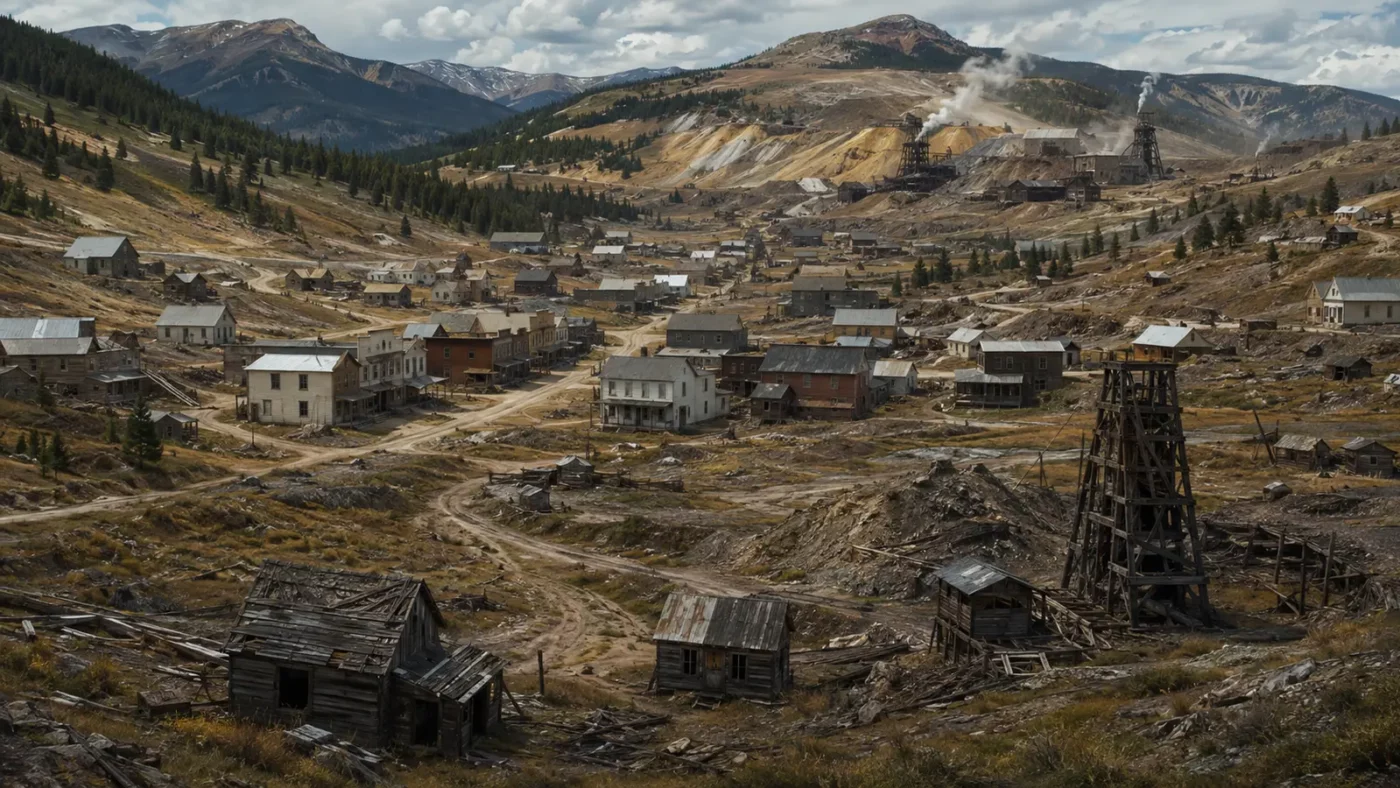
At a glance: A step-by-step explanation of discovery, speculation, infrastructure, decline and preservation.
Mining camps rarely begin as complete towns. A discovery attracts prospectors, followed by merchants, transport services and investors who turn uncertain geology into urban expectation.
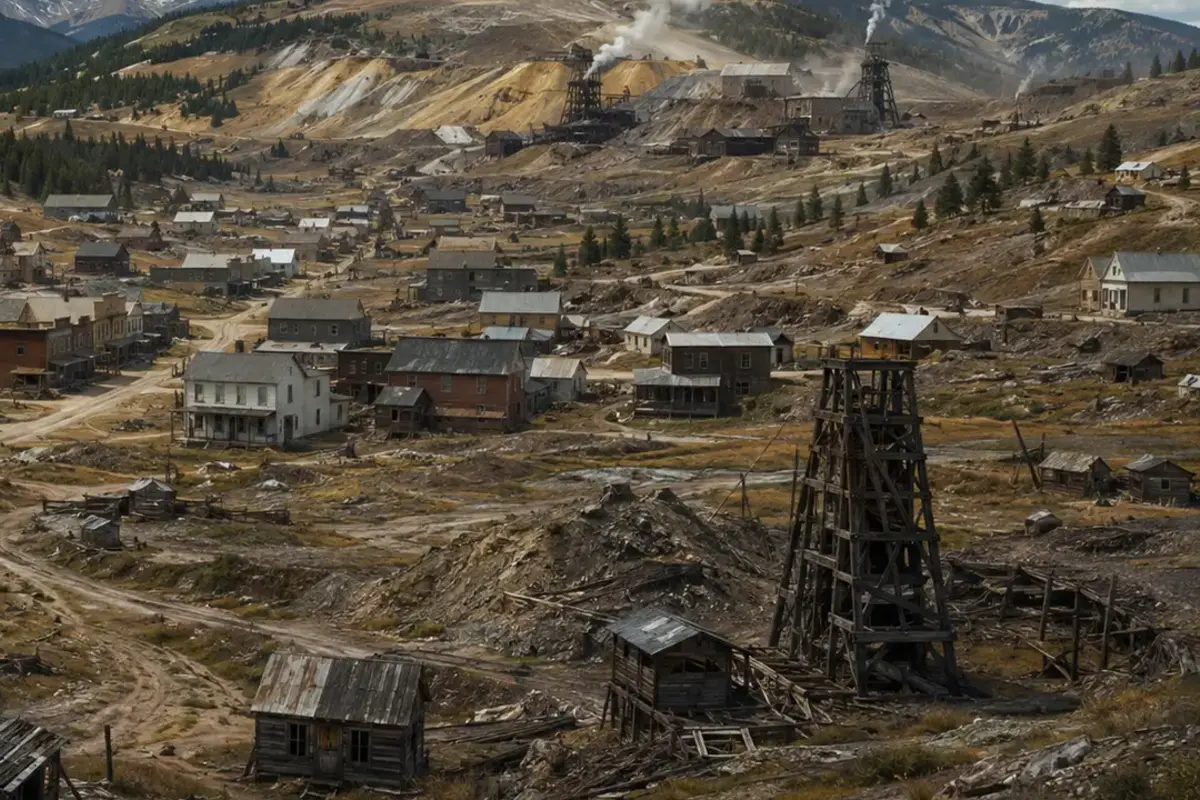
How the place took shape
If production grows, mills, rail connections, utilities and substantial buildings appear. Newspapers and banks can make a temporary camp feel permanent.
Population growth often outruns verified ore reserves. Promotional claims attract capital, but high-grade deposits may be small, difficult to process or expensive to reach.
Why the community changed
Decline begins when costs exceed returns, investment stops or commodity prices change. Fire, water scarcity and transport competition can accelerate the process.
Some residents leave immediately; others remain through smaller mining cycles. Buildings are moved, reused, burned or stripped for material.
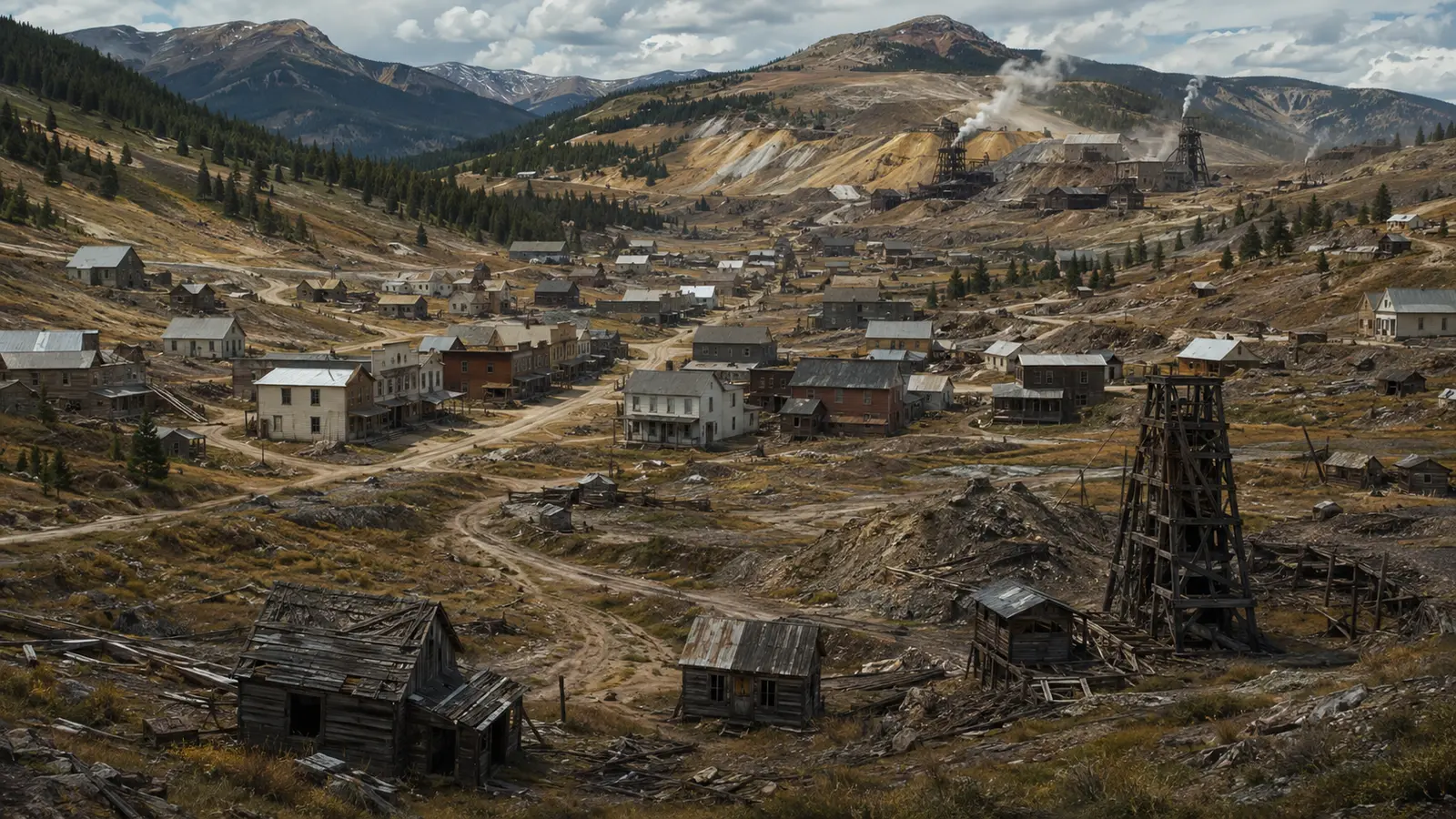
What remains today
Bodie and Rhyolite represent different outcomes: one preserved as an extensive state historic park, the other known for monumental desert ruins.
Mining sites contain shafts, contaminated materials and unstable ground. Explore only through managed public areas.
Why this story matters
The life cycle explains why impressive construction is not proof of long-term success. Architecture records confidence at a moment in time.
Places like this are often reduced to a single dramatic label—ghost town, ruin, failure—but the physical remains tell a more complicated story. Economic decisions, transportation networks, natural resources and public policy all shape whether a community grows, adapts or disappears. Reading the landscape carefully means remembering that these were workplaces and homes before they became destinations.
Primary reference: National Park Service — Bodie Historic District. This article summarizes public-history information in original language and adds editorial context; it does not reproduce the source text.