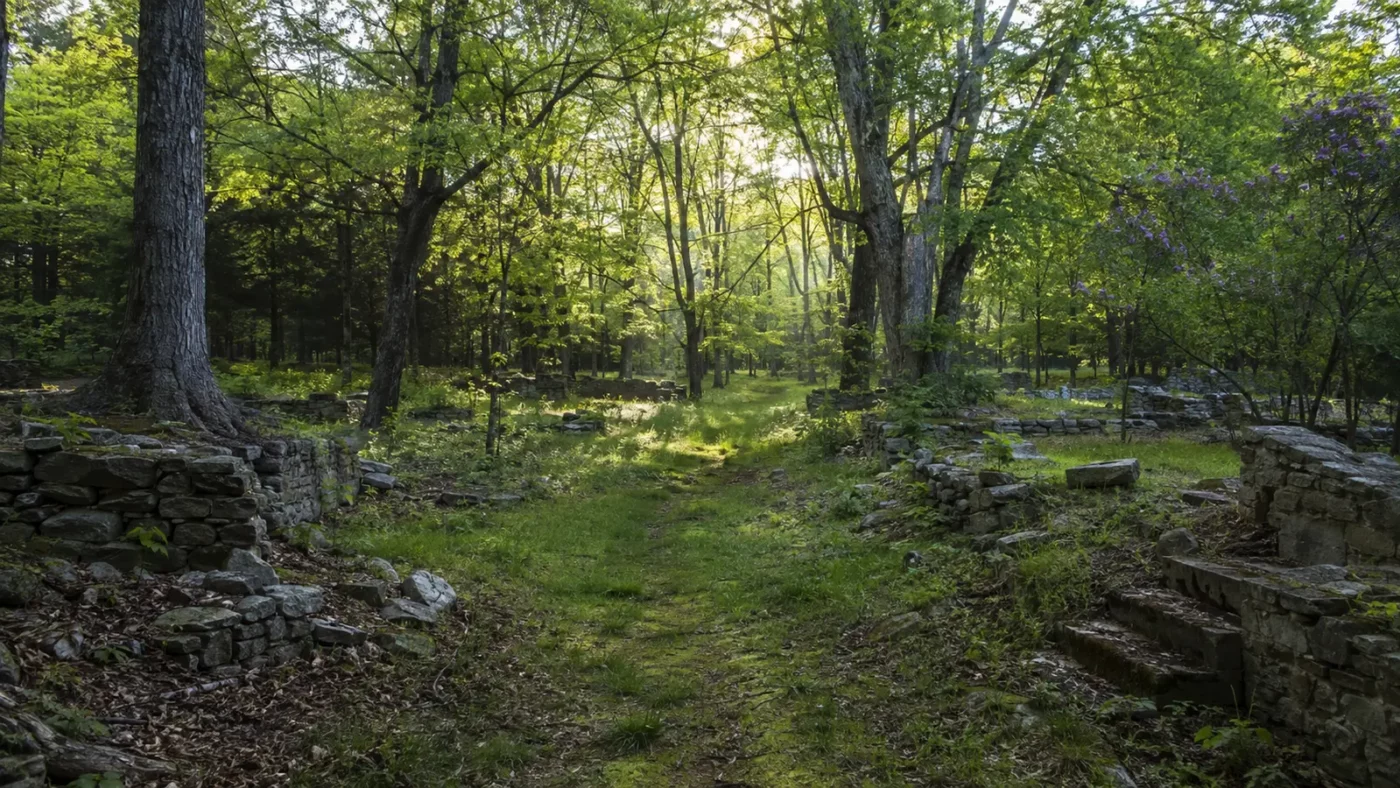
At a glance: How vegetation conceals foundations while preserving a different kind of historical landscape.
A vanished town in a forest can look like untouched nature. Stone lines, old fruit trees, road grades and dock pilings may be the only clues that homes and industry once occupied the site.
How the place took shape
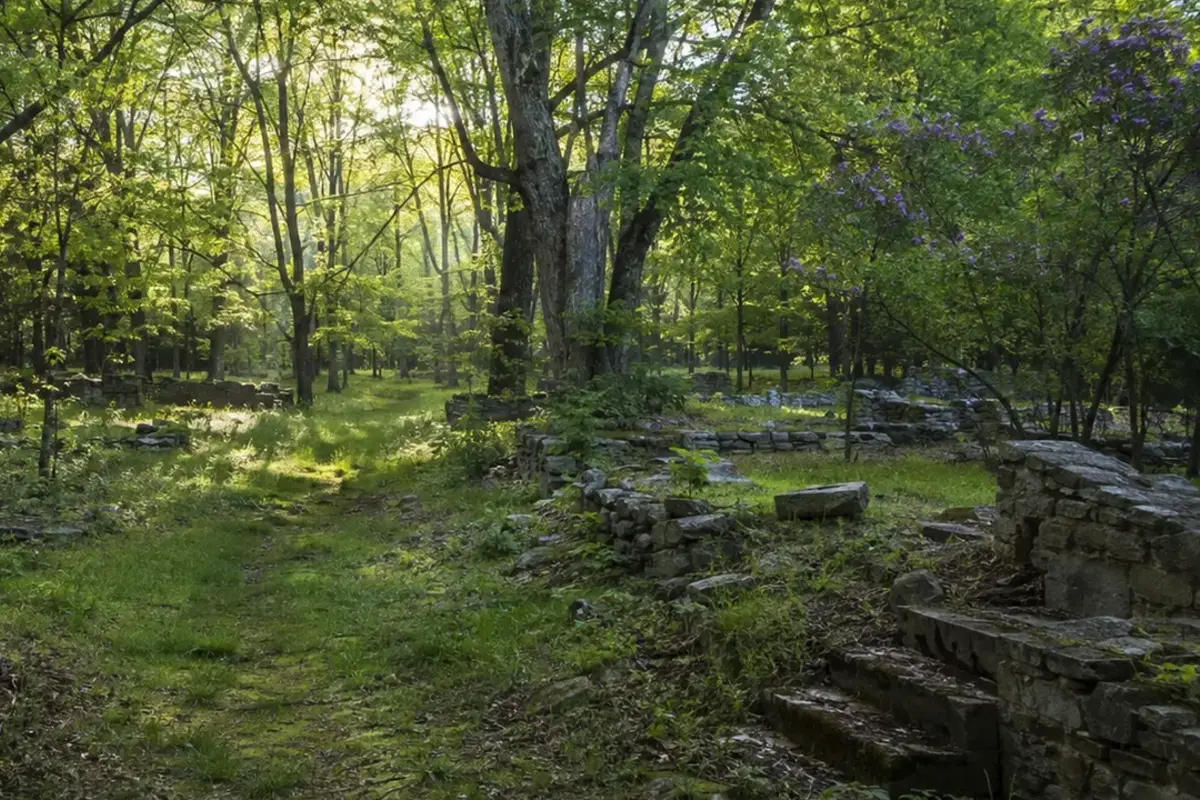
Logging communities create a striking reversal. The first settlement removes trees for production; after the industry ends, a new forest grows across streets and foundations.
Roots and moisture can damage masonry, while leaf litter conceals artifacts. At the same time, vegetation can shield a site from casual disturbance.
Why the community changed
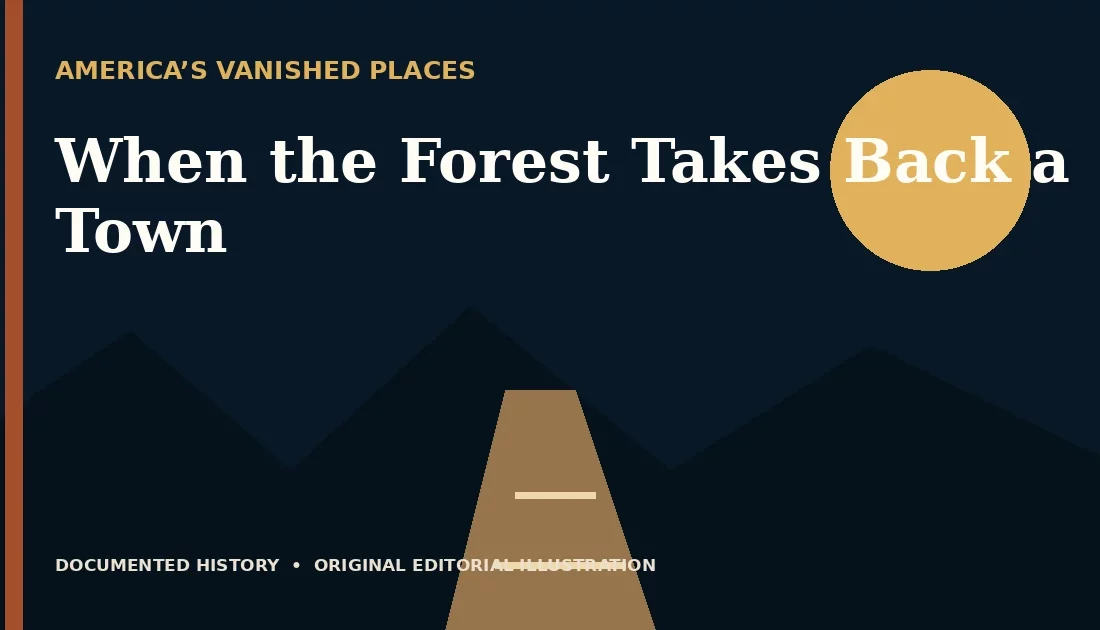
Interpreting such places requires maps and historical photographs. Visitors expecting standing buildings may walk through a former business district without recognizing it.
The returning ecosystem is not separate from history. It records the time elapsed since extraction and the landscape’s response.
What remains today
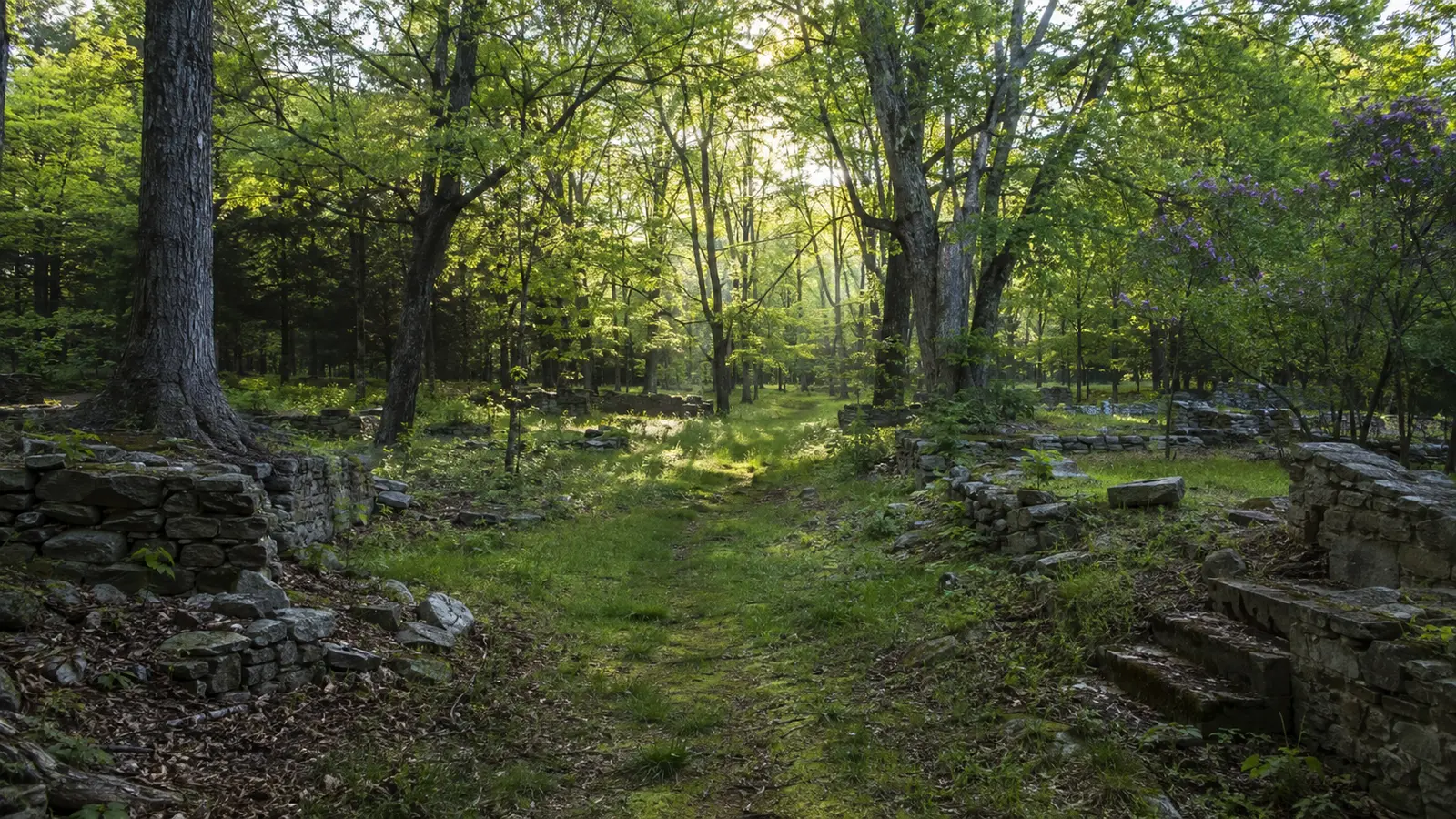
Aral, within Sleeping Bear Dunes National Lakeshore, was abandoned after the surrounding forest had been cut and is now largely reclaimed.
Stay on authorized routes and do not dig or clear vegetation to expose features. Archaeological evidence should remain in context.
Why this story matters
Forest ghost towns remind us that absence can be evidence. What grows after people leave can explain why they came in the first place.
Places like this are often reduced to a single dramatic label—ghost town, ruin, failure—but the physical remains tell a more complicated story. Economic decisions, transportation networks, natural resources and public policy all shape whether a community grows, adapts or disappears. Reading the landscape carefully means remembering that these were workplaces and homes before they became destinations.
Primary reference: National Park Service — Aral: A Town That Vanished. This article summarizes public-history information in original language and adds editorial context; it does not reproduce the source text.