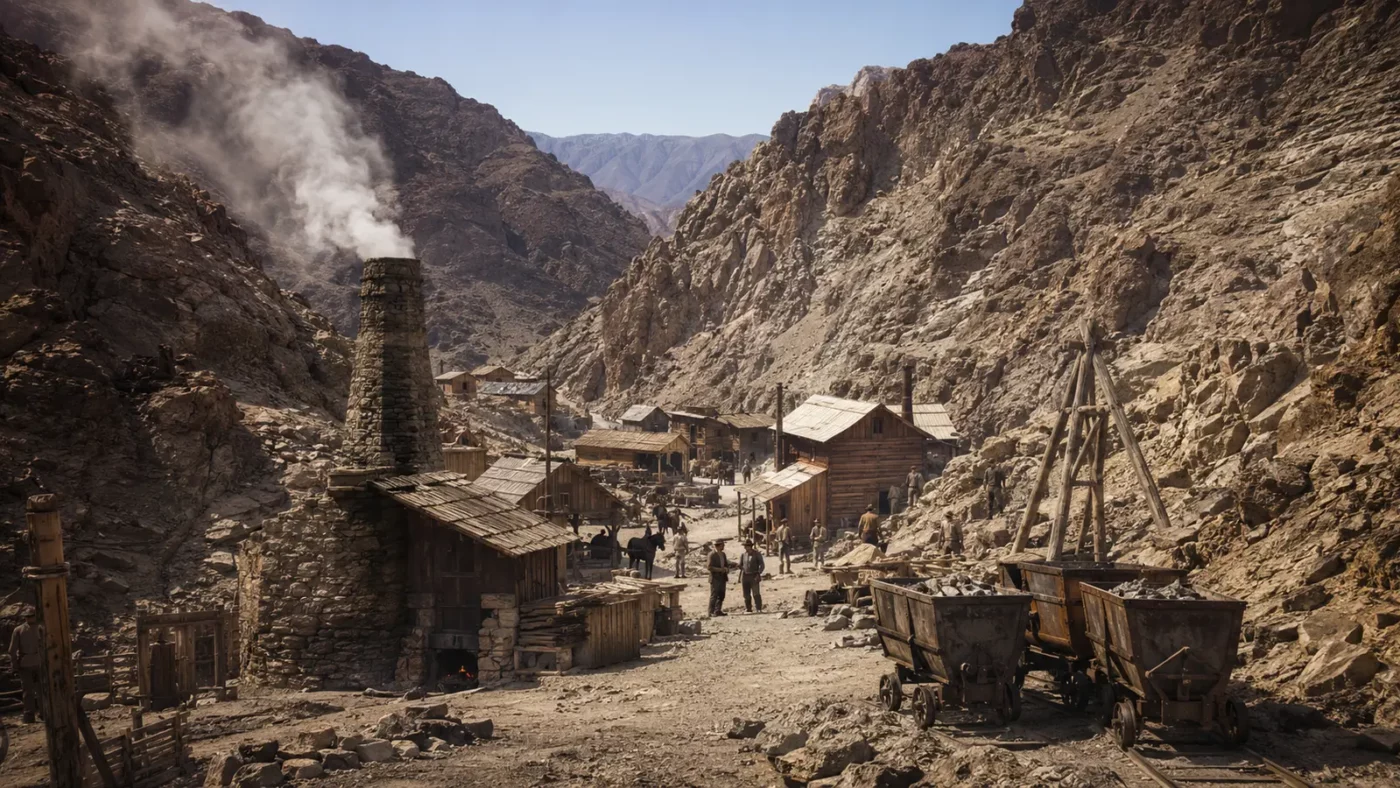
At a glance: A remote canyon mining site reached by a demanding route in Death Valley country.
Panamint City was built deep in Surprise Canyon, where water and steep terrain shaped both mining and access. Its remoteness remains central to the site today.
How the place took shape
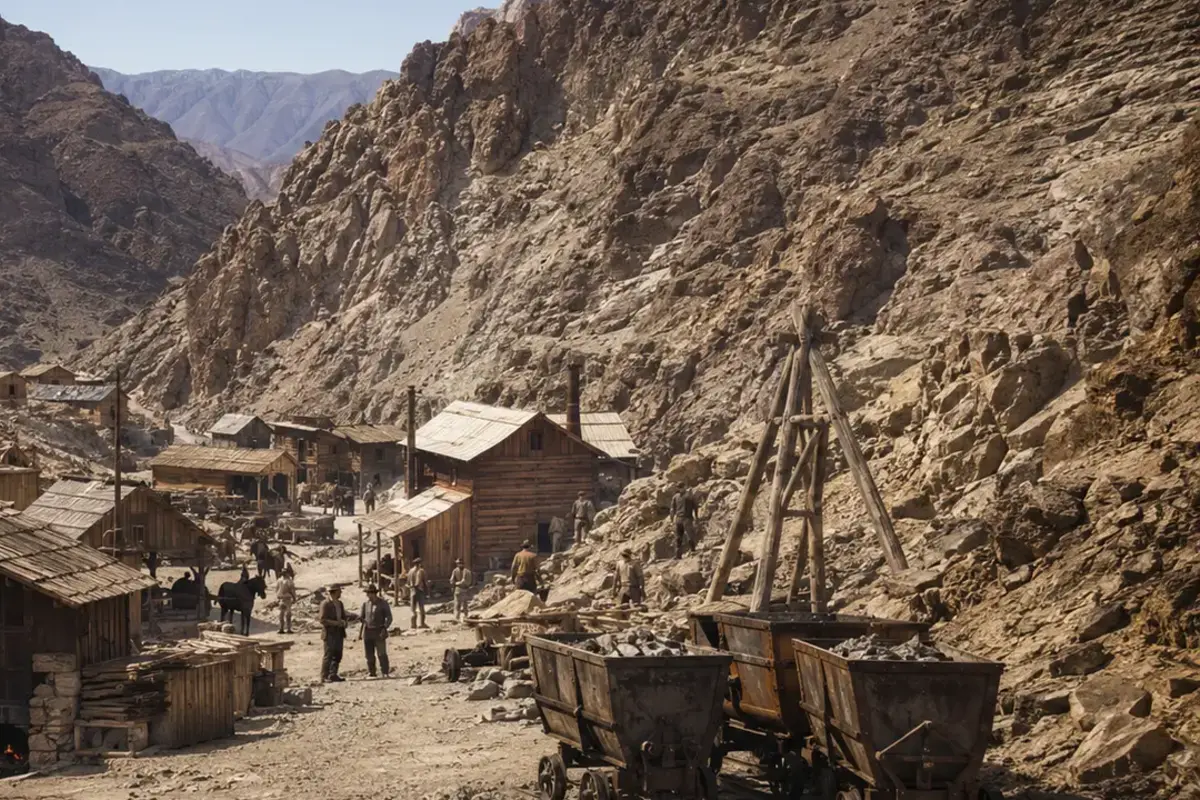
A silver boom in the 1870s brought miners, investors and businesses into the canyon. Processing infrastructure and a dense camp appeared in a location that challenged transport.
Residents attempted to create urban life around a short mineral cycle, but floods, isolation and the cost of moving ore placed constant pressure on the settlement.
Why the community changed
Mining results failed to sustain the original expectations, while flash floods damaged infrastructure. The boom weakened and residents moved on.
Later mining episodes reused parts of the site, leaving a layered landscape rather than a single moment frozen in time.
What remains today
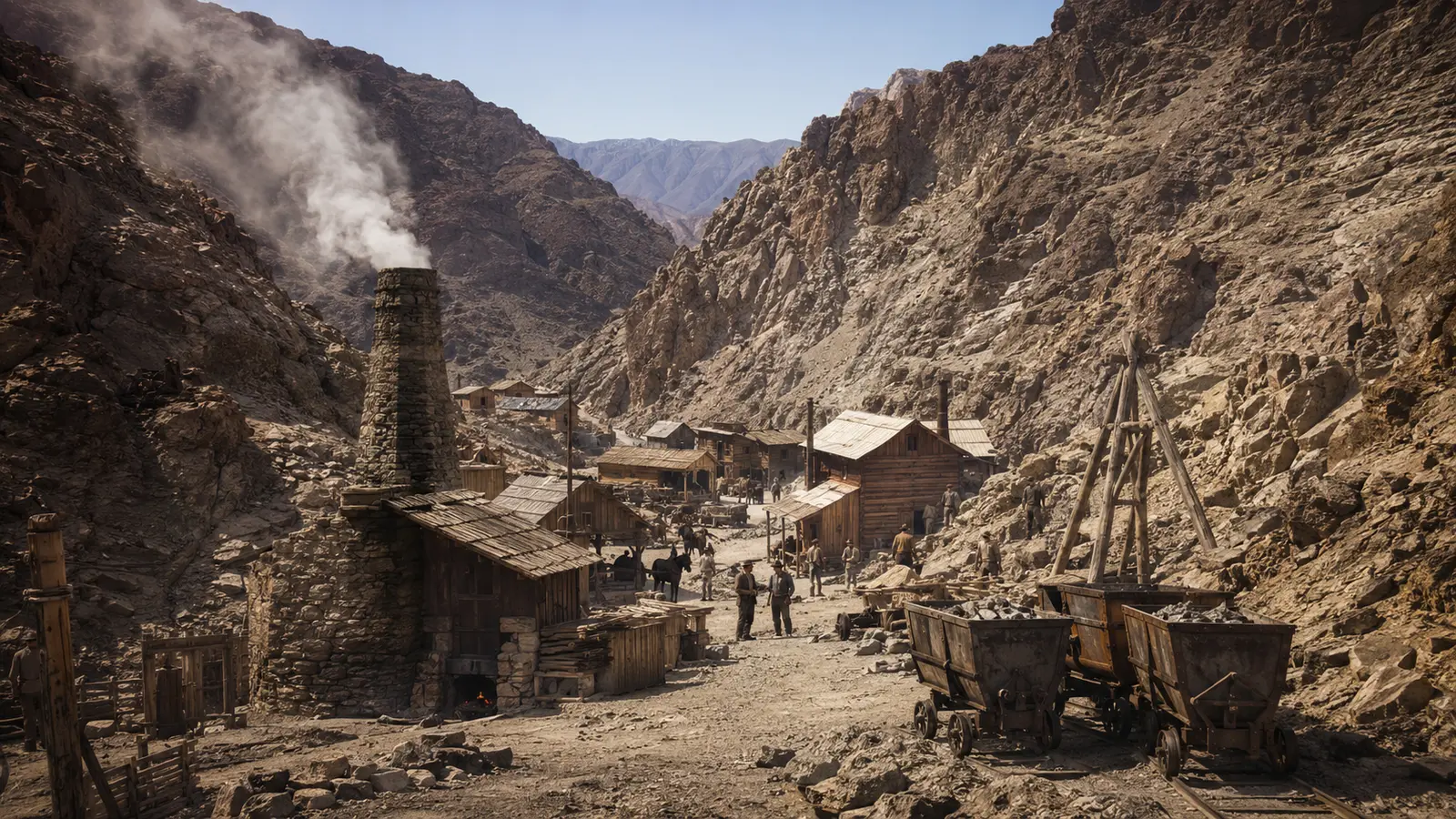
Ruins and mining remains survive in and around Surprise Canyon. The broader area is managed with attention to wilderness, cultural resources and sensitive desert habitat.
This is not a casual roadside stop. Visitors must verify current access, avoid mines and unstable structures, and prepare for remote backcountry conditions.
Why this story matters
Panamint City shows how terrain can magnify every weakness in a boom economy. Rich ore alone does not guarantee that a remote city can survive.
Places like this are often reduced to a single dramatic label—ghost town, ruin, failure—but the physical remains tell a more complicated story. Economic decisions, transportation networks, natural resources and public policy all shape whether a community grows, adapts or disappears. Reading the landscape carefully means remembering that these were workplaces and homes before they became destinations.
Primary reference: National Park Service — Death Valley Ghost Towns. This article summarizes public-history information in original language and adds editorial context; it does not reproduce the source text.