At a glance: A Gulf-region lumber town documented by federal photographers after abandonment.
In 1942, Farm Security Administration photographer John Collier Jr. recorded Falco’s deserted industrial landscape: railroad remnants, mill infrastructure and buildings left after a lumber economy ended.
How the place took shape
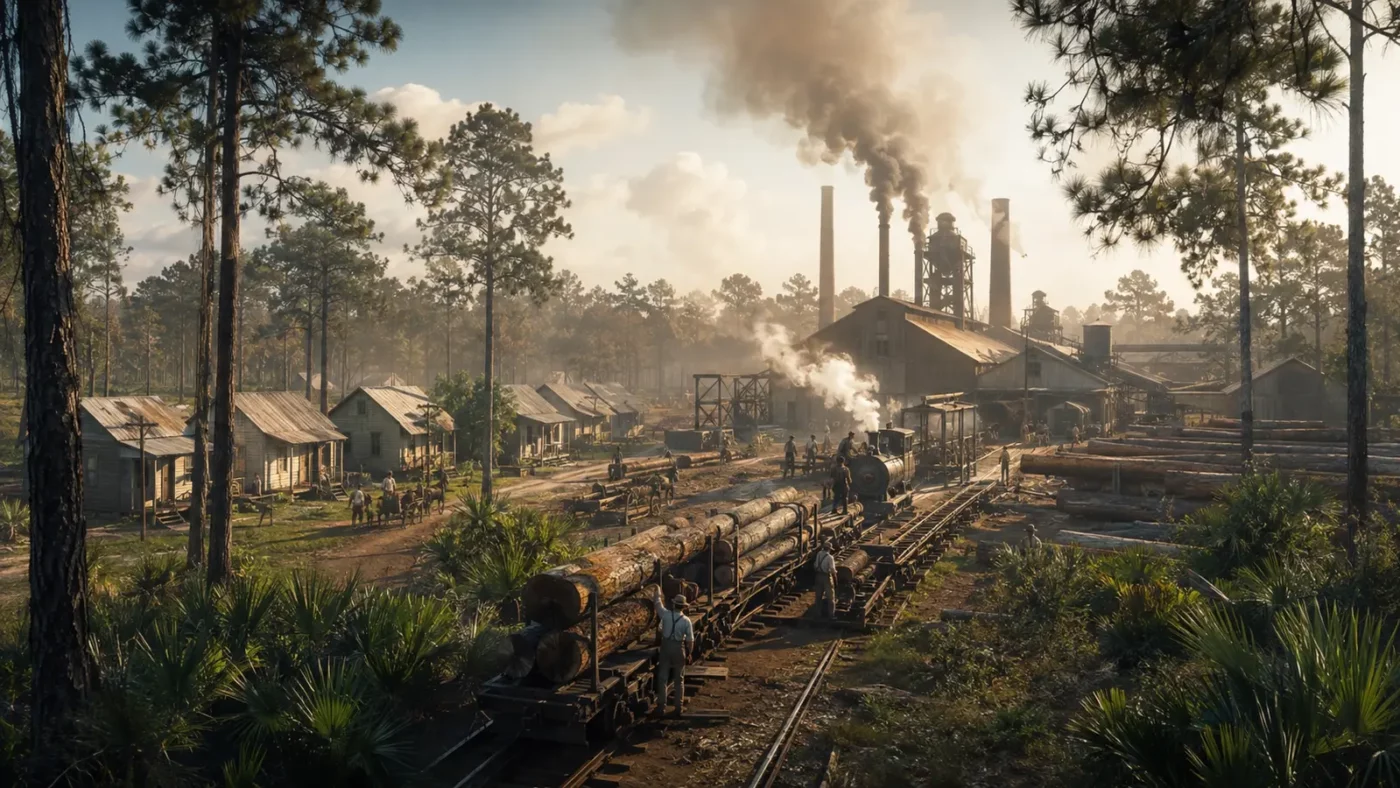
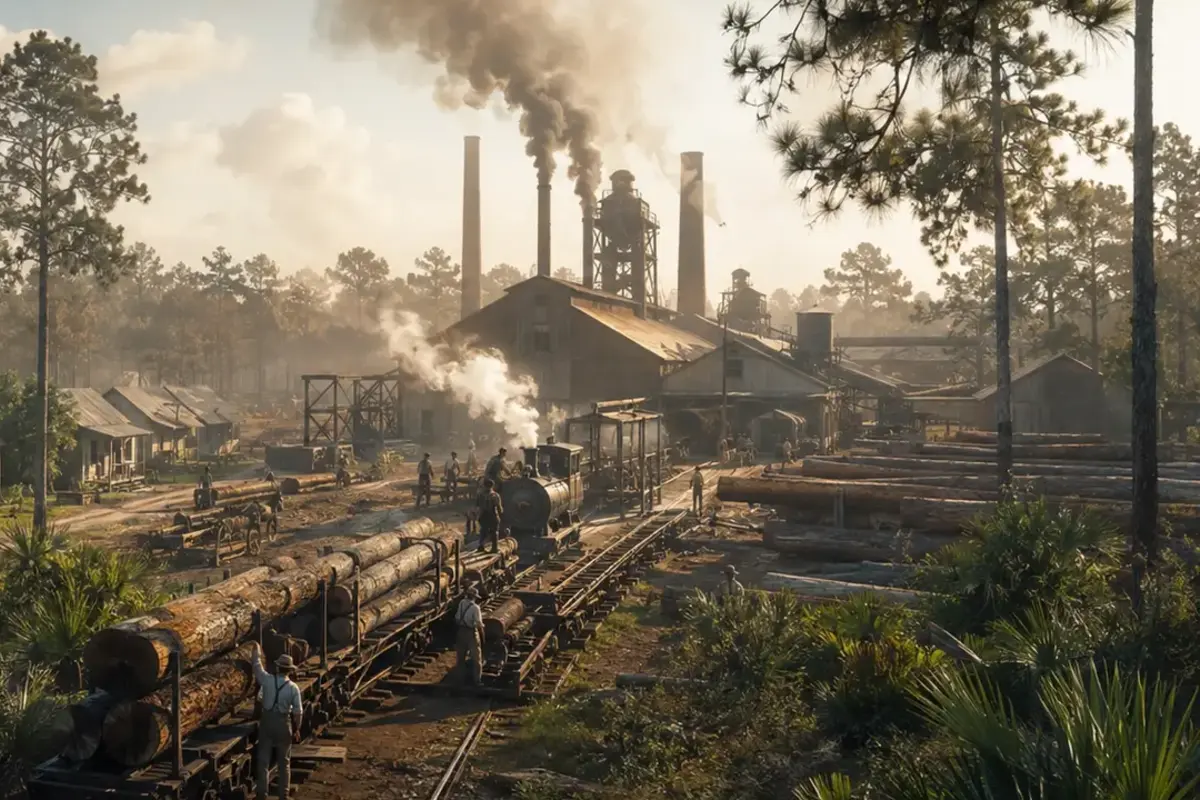
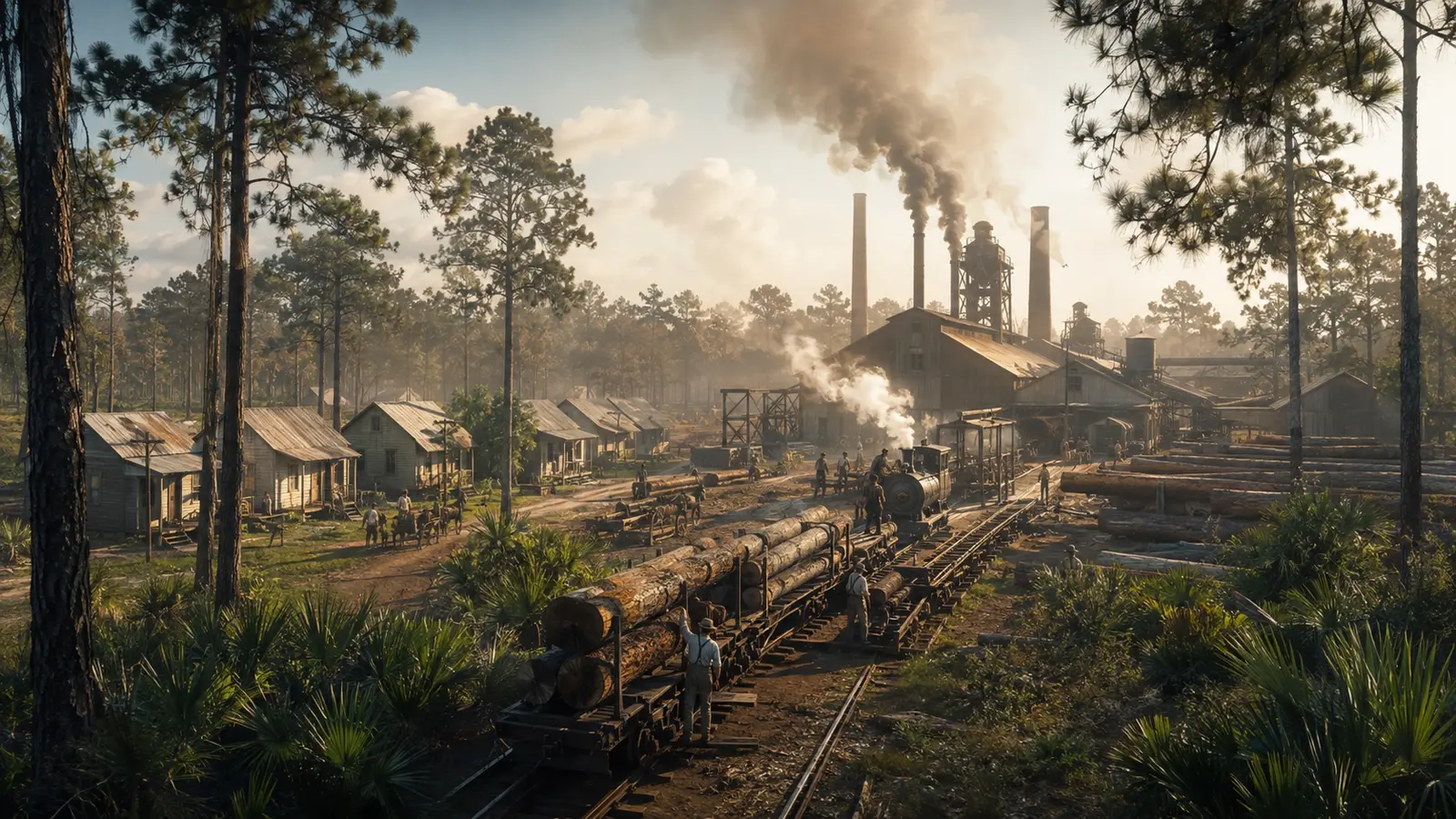
The settlement grew around timber cutting and milling in the Florida Gulf region. Rail, a mill pond and company facilities connected forests to markets.
Like many company towns, Falco concentrated work and housing around one employer and one extractive resource. This efficiency also created dependence.
Why the community changed
The lumber operation ended and the town was considered abandoned by 1923. When the industry moved or closed, most community functions could not continue.
A post office and old grist mill reportedly remained in operation when the federal photographs were made, reminding us that abandonment labels are rarely absolute.
What remains today
The Library of Congress preserves a group of ten photographs that document Falco in 1942 and carries a rights statement indicating no known publication restrictions.
The historic site should not be assumed public or safe. The archive offers a lawful way to study details without disturbing present ownership.
Why this story matters
Falco places visual evidence at the center of research. Documentary photographs can reveal infrastructure and lingering activity that later summaries omit.
Places like this are often reduced to a single dramatic label—ghost town, ruin, failure—but the physical remains tell a more complicated story. Economic decisions, transportation networks, natural resources and public policy all shape whether a community grows, adapts or disappears. Reading the landscape carefully means remembering that these were workplaces and homes before they became destinations.
Primary reference: Library of Congress — Falco, Florida. This article summarizes public-history information in original language and adds editorial context; it does not reproduce the source text.