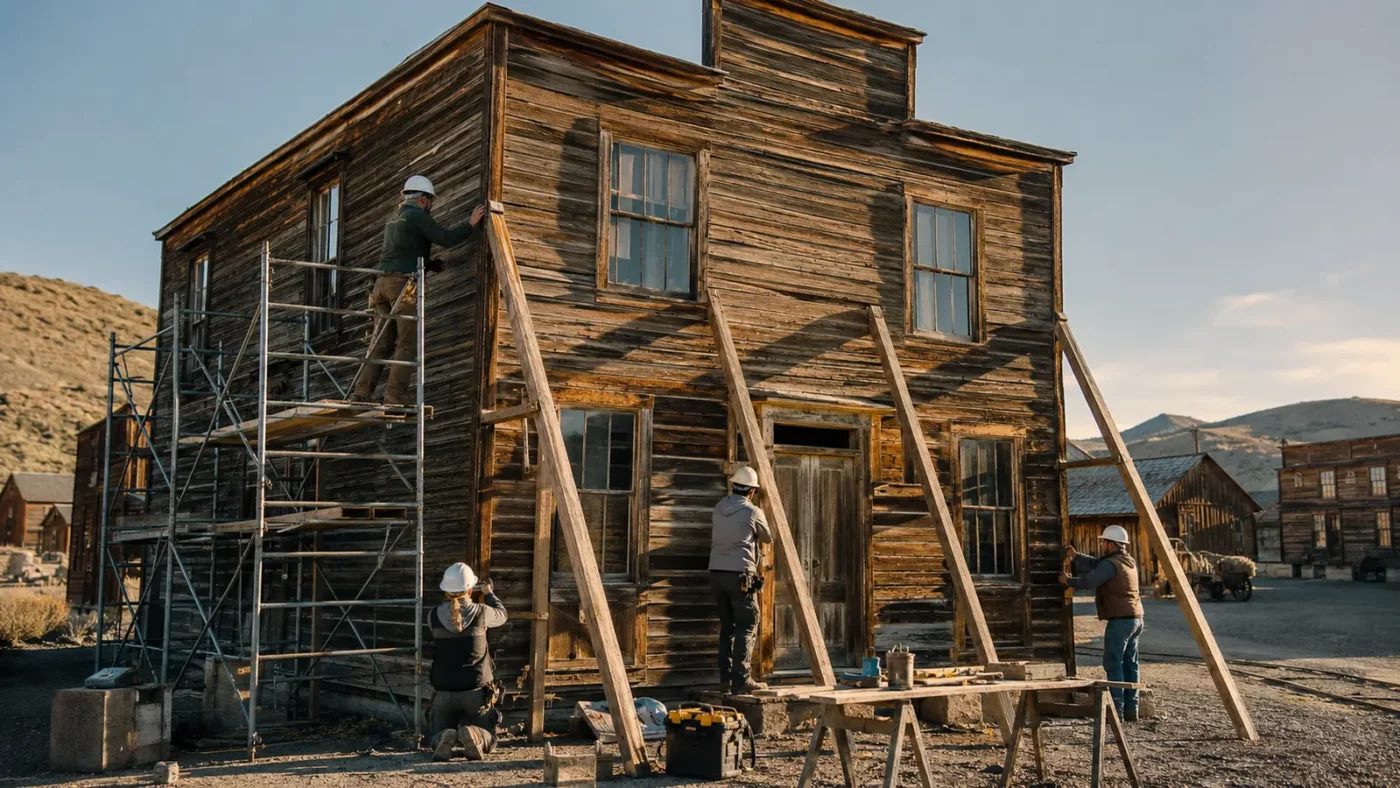
At a glance: Why preservation teams sometimes stabilize ruins instead of restoring them to look new.
Visitors sometimes assume weathered buildings are neglected. At sites managed in arrested decay, the goal is to slow deterioration while retaining evidence of age and abandonment.
How the place took shape
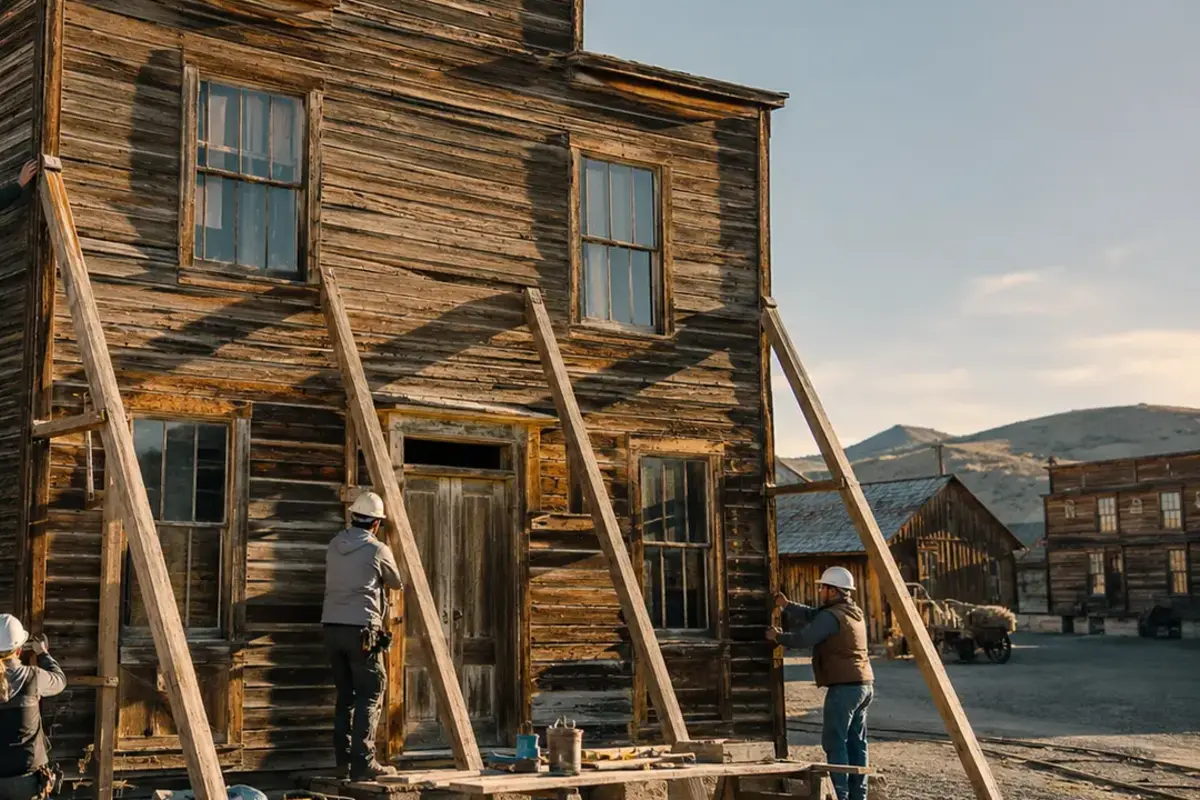
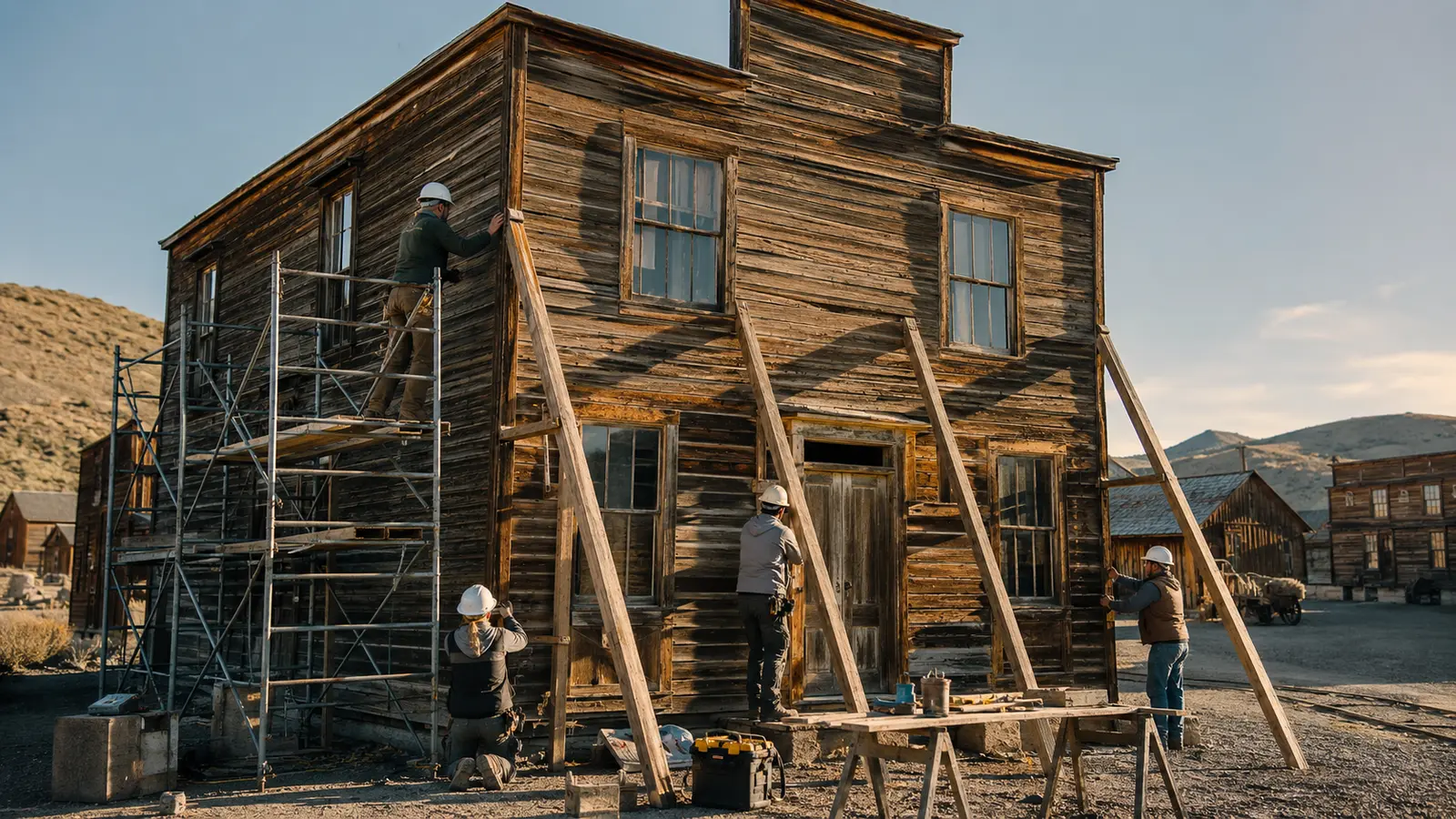
Preservation specialists document structures, repair critical failures and control water or movement without replacing every worn surface. The approach differs from reconstruction.
Original materials, tool marks, wallpaper and object placement can communicate more than a polished replica. Their fragility also limits access.
Why the community changed
The difficult balance is deciding what must change to keep a structure standing and what should remain visibly old. Climate and visitor pressure make that balance continuous.
Arrested decay is not an excuse for doing nothing. It requires monitoring, skilled labor and choices about authenticity.
What remains today
Bodie is one of the best-known American examples, with buildings maintained in the condition inherited by the state park.
Visitors support preservation by staying out of closed rooms, not touching objects and accepting that some areas cannot safely open.
Why this story matters
The concept helps explain why a historic ghost town should not look like a freshly constructed theme park. Age is part of the evidence.
Places like this are often reduced to a single dramatic label—ghost town, ruin, failure—but the physical remains tell a more complicated story. Economic decisions, transportation networks, natural resources and public policy all shape whether a community grows, adapts or disappears. Reading the landscape carefully means remembering that these were workplaces and homes before they became destinations.
Primary reference: National Park Service — Bodie Historic District. This article summarizes public-history information in original language and adds editorial context; it does not reproduce the source text.