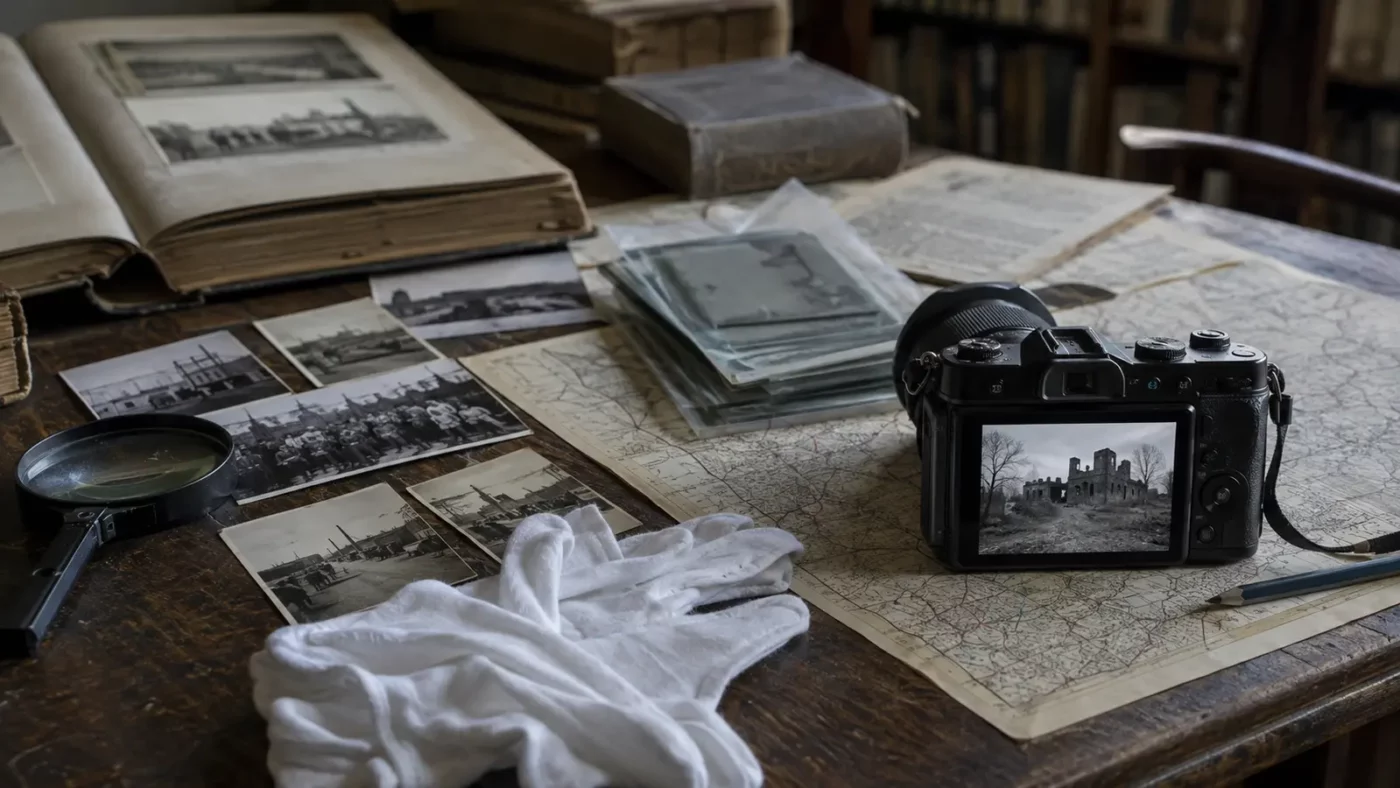
At a glance: How archival image series restore people, work and context to abandoned places.
A modern ruin photograph shows what remains. A historical photograph can show what the building did, who used it and how the surrounding street functioned.
How the place took shape
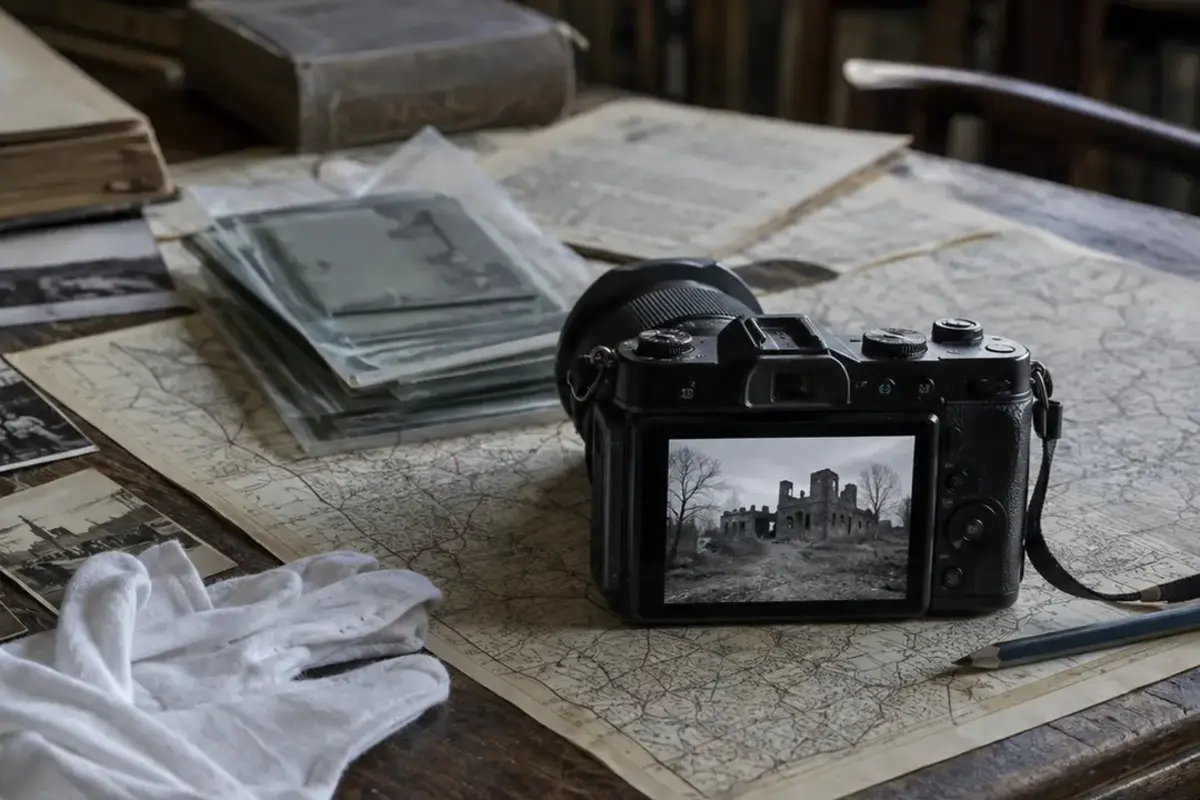
Federal documentary projects recorded towns during the Great Depression and wartime period. Photographers often created groups of images rather than one dramatic frame.
Series matter because they connect industrial structures with homes, workers, families and landscapes. Captions provide dates and names that later reposts frequently strip away.
Why the community changed
Ruin clickbait reverses this process: it isolates decay, exaggerates mystery and sometimes invents abandonment dates. The result is visually strong but historically weak.
Archive records also explain rights and reproduction options. Public availability does not automatically mean every image is free of restrictions.
What remains today
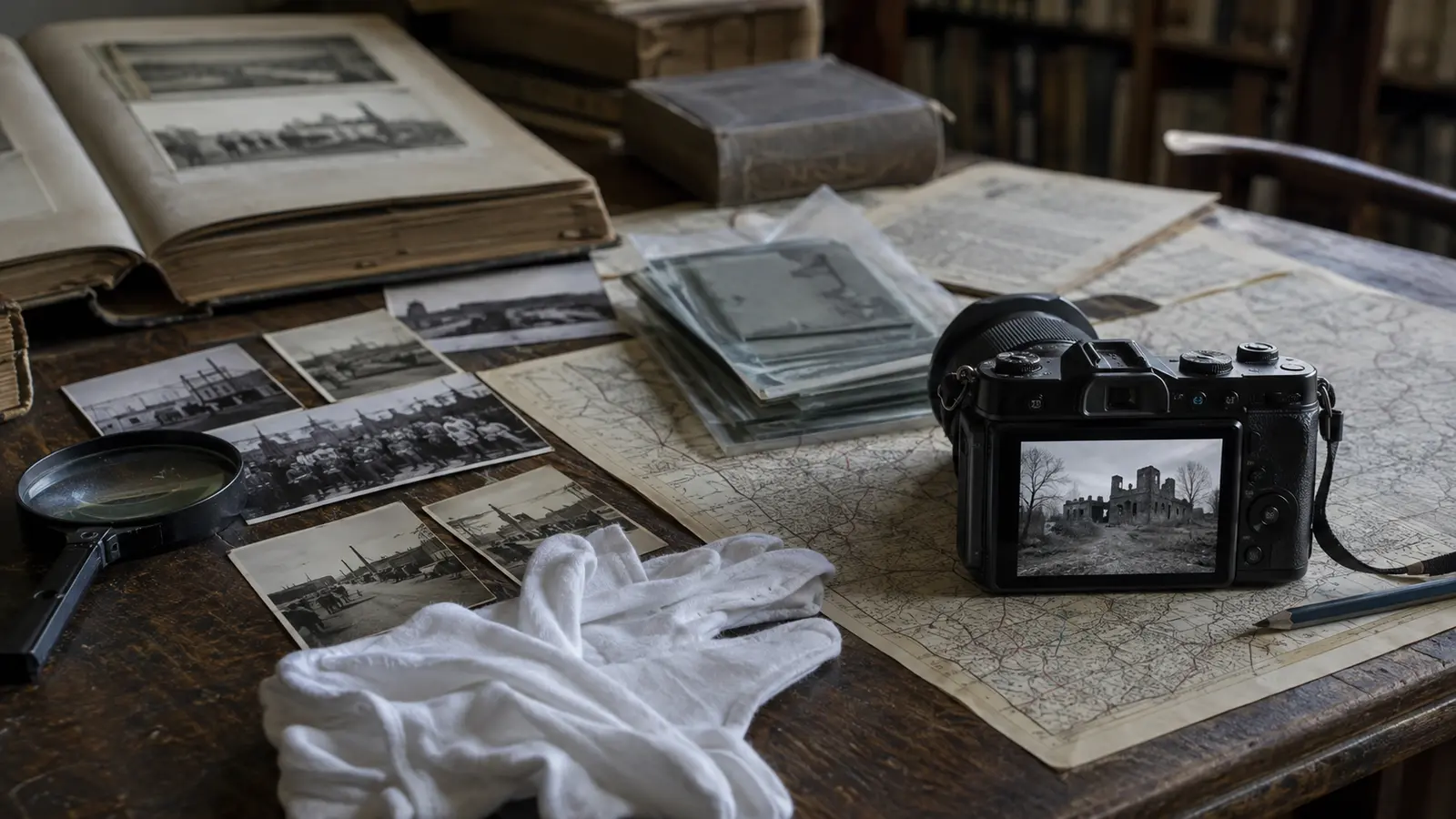
The Falco, Mansfield and Pony collections in the Library of Congress demonstrate how grouped photographs document communities at different stages of decline.
Use catalog captions as evidence but note when an institution says data is unverified. Link to the item record so readers can inspect context.
Why this story matters
Historical photographs remind us that buildings were designed for use. They return human scale to places later photographed as empty spectacles.
Places like this are often reduced to a single dramatic label—ghost town, ruin, failure—but the physical remains tell a more complicated story. Economic decisions, transportation networks, natural resources and public policy all shape whether a community grows, adapts or disappears. Reading the landscape carefully means remembering that these were workplaces and homes before they became destinations.
Primary reference: Library of Congress — Prints & Photographs Online Catalog. This article summarizes public-history information in original language and adds editorial context; it does not reproduce the source text.