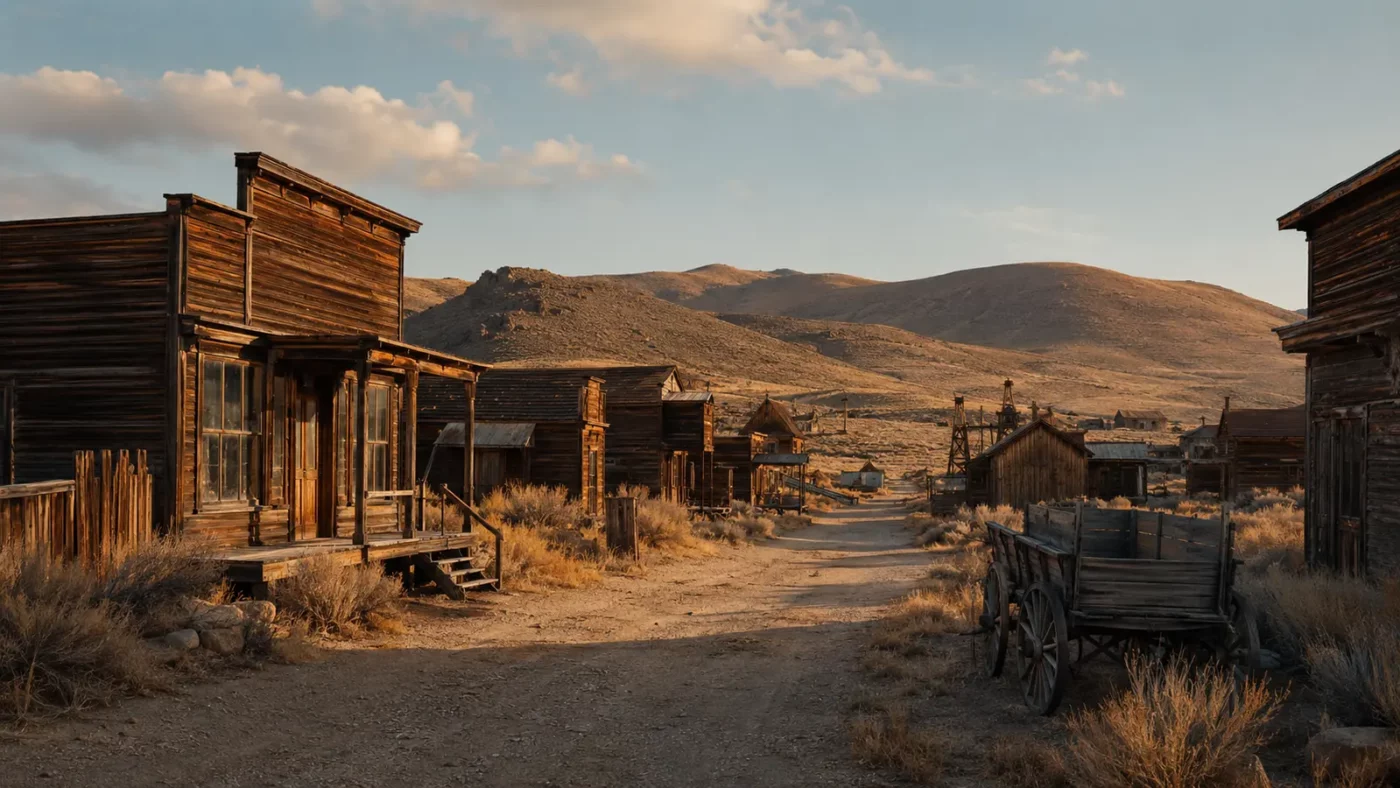
At a glance: A high-desert mining town where more than one hundred historic buildings survive.
The wind in Bodie moves through empty streets at more than 8,000 feet above sea level, but the town is not a movie set. Its buildings are the surviving framework of a community built around mineral wealth.
How the place took shape
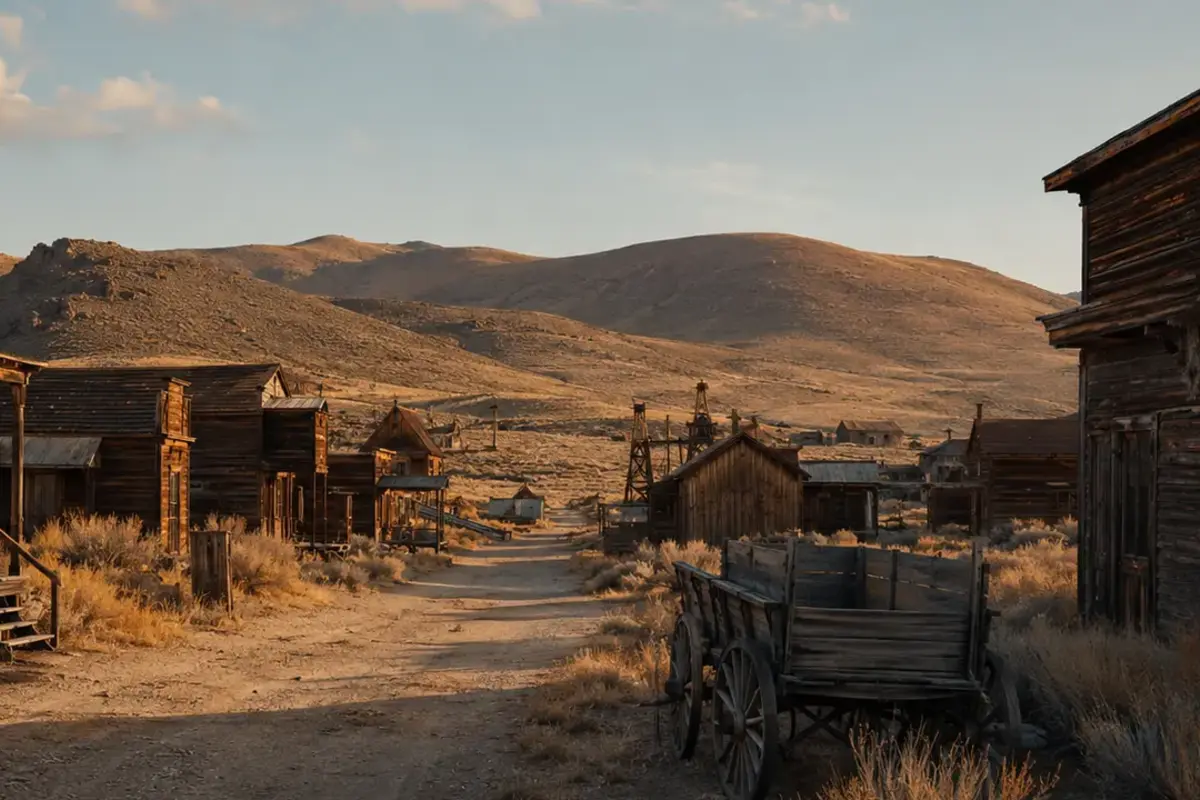
Gold discoveries in the Mono Basin drew prospectors after 1859. Bodie expanded into a major mining settlement with mills, businesses, homes and a diverse population that included a substantial Chinese community.
At its height, residents encountered the institutions of a real town: stores, social halls, schools, religious life and the constant risks of an isolated mining economy. Success was visible, but it depended on ore, capital and transportation.
Why the community changed
Mineable material became harder to extract profitably and the population fell after the boom years. Major fires in 1892 and 1932 removed large parts of the business district, while wartime restrictions finally suspended mining in 1942.
Decline happened in stages rather than on one dramatic night. Families and businesses left as opportunity narrowed, and isolation helped protect what had not burned.
What remains today
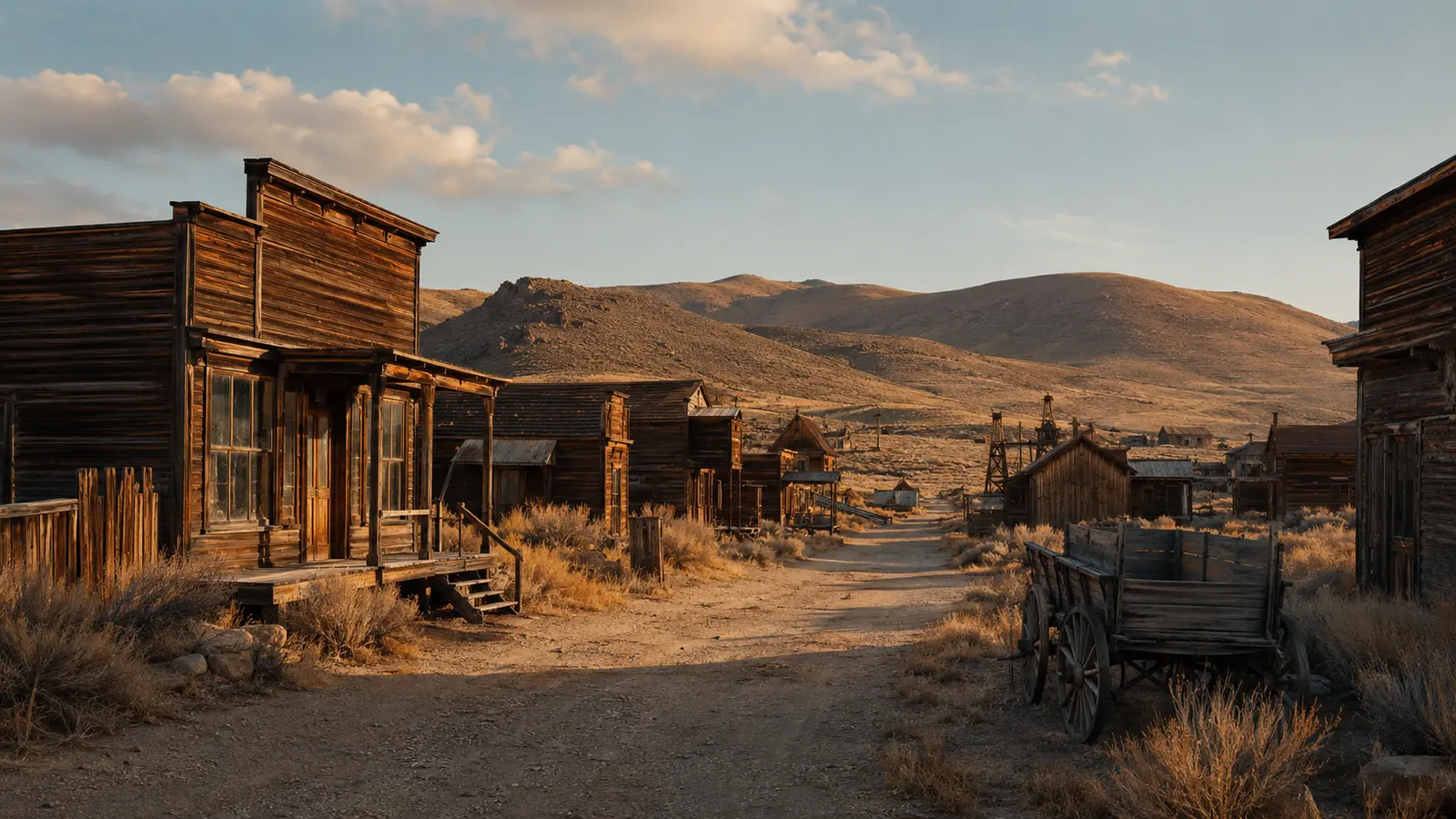
Bodie is now a California state historic park and National Historic Landmark District. Interiors and objects are maintained in a condition often described as arrested decay rather than restored to look new.
Visitors should use official park information because the final road, weather and seasonal services can affect access. Buildings and artifacts must be observed without disturbance.
Why this story matters
Bodie shows why preservation does not always mean rebuilding. Stabilizing weathered structures can protect the honesty of a place while allowing visitors to see how abruptly ordinary routines ended.
Places like this are often reduced to a single dramatic label—ghost town, ruin, failure—but the physical remains tell a more complicated story. Economic decisions, transportation networks, natural resources and public policy all shape whether a community grows, adapts or disappears. Reading the landscape carefully means remembering that these were workplaces and homes before they became destinations.
Primary reference: National Park Service — Bodie Historic District. This article summarizes public-history information in original language and adds editorial context; it does not reproduce the source text.