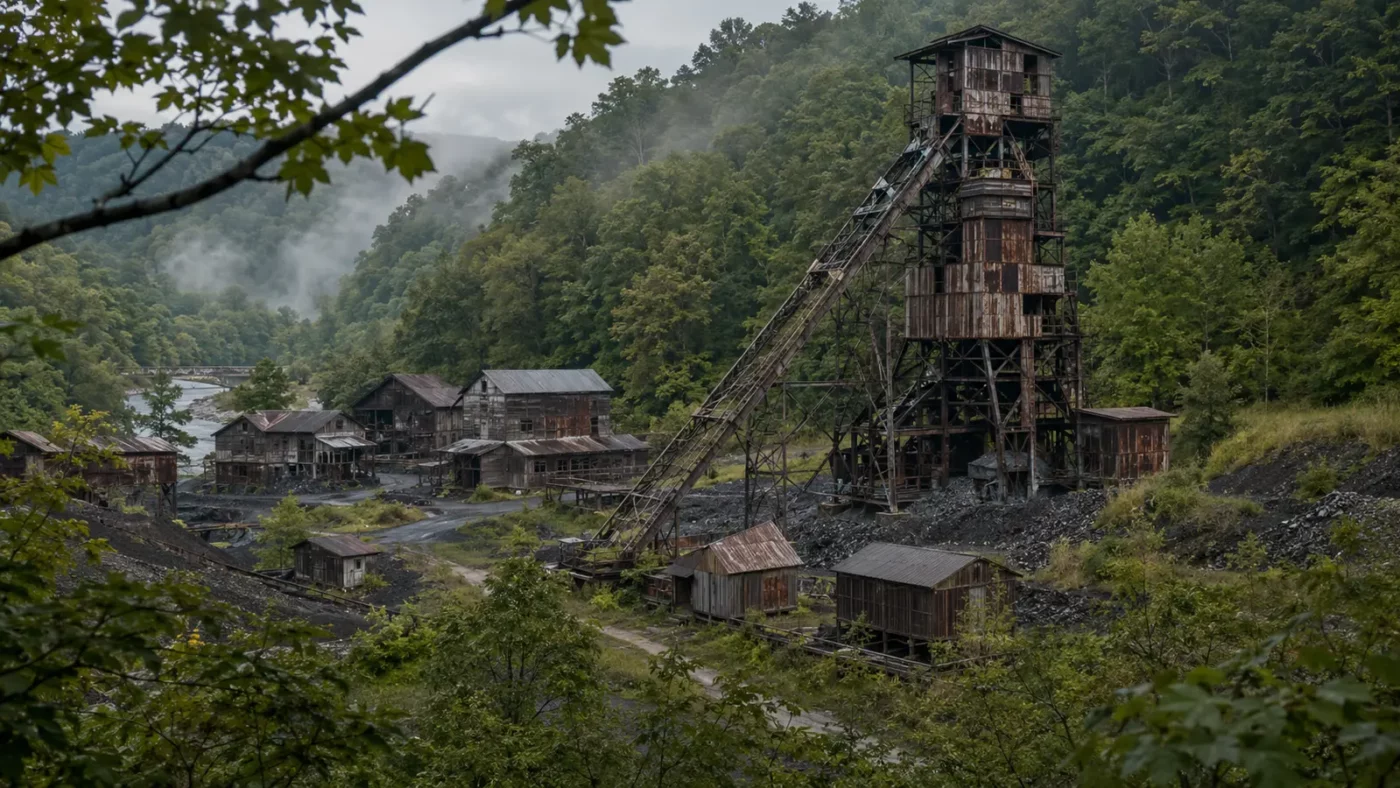
At a glance: A former company coal town interpreted through structures, voices and the landscape of Mine 18.
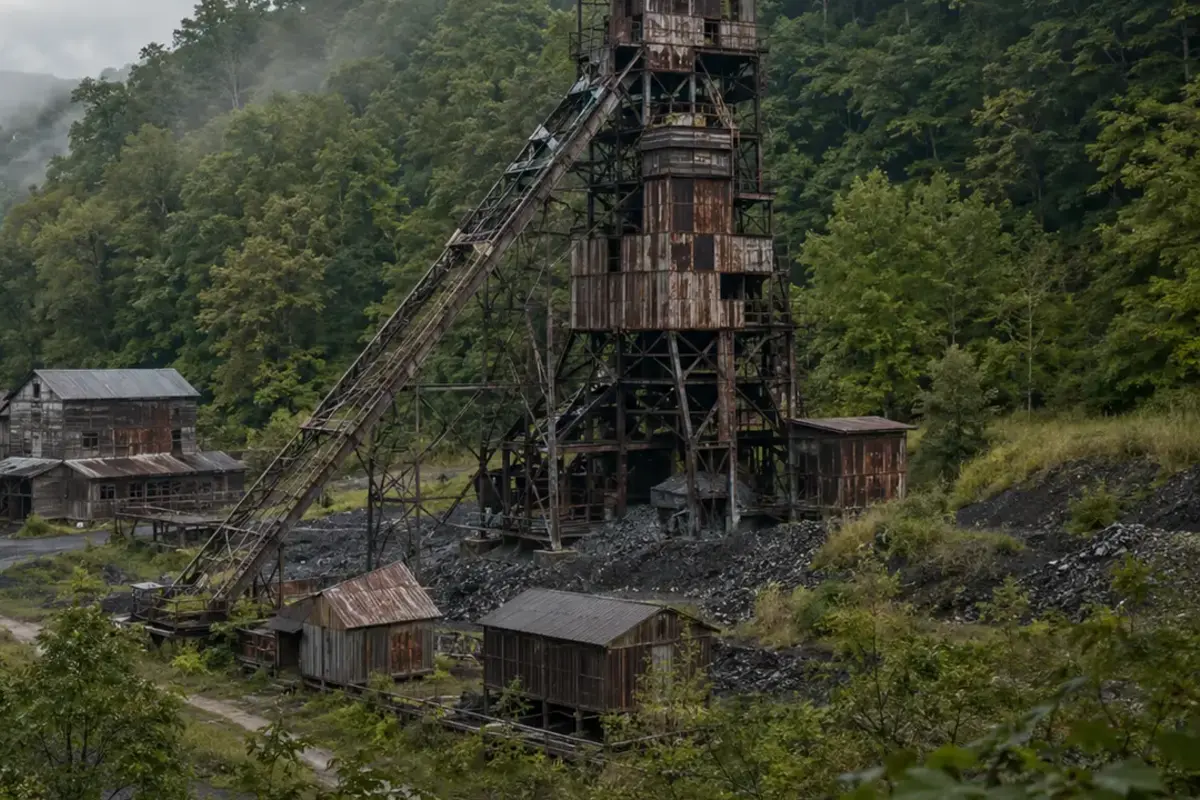
Rail tracks and the great tipple structure at Blue Heron point to the industrial system that once organized daily life along the Big South Fork River. The settlement was also known simply as Mine 18.
How the place took shape
The Stearns Coal and Lumber Company opened the mining community in 1937. Its remote location required housing and services close to the mine, creating a place where employment and home life were tightly connected.
Hundreds of people lived and worked there. Family life, school, courtship, entertainment and the company store existed alongside demanding and hazardous underground labor.
Why the community changed
The mine closed in December 1962 when operations were no longer profitable. Without the job that justified the isolated town, residents had little economic reason to remain.
Buildings and routines disappeared, yet former residents preserved memories that complicate a simple ruin narrative. Work could be dangerous and company control significant, while community relationships remained deeply meaningful.
What remains today
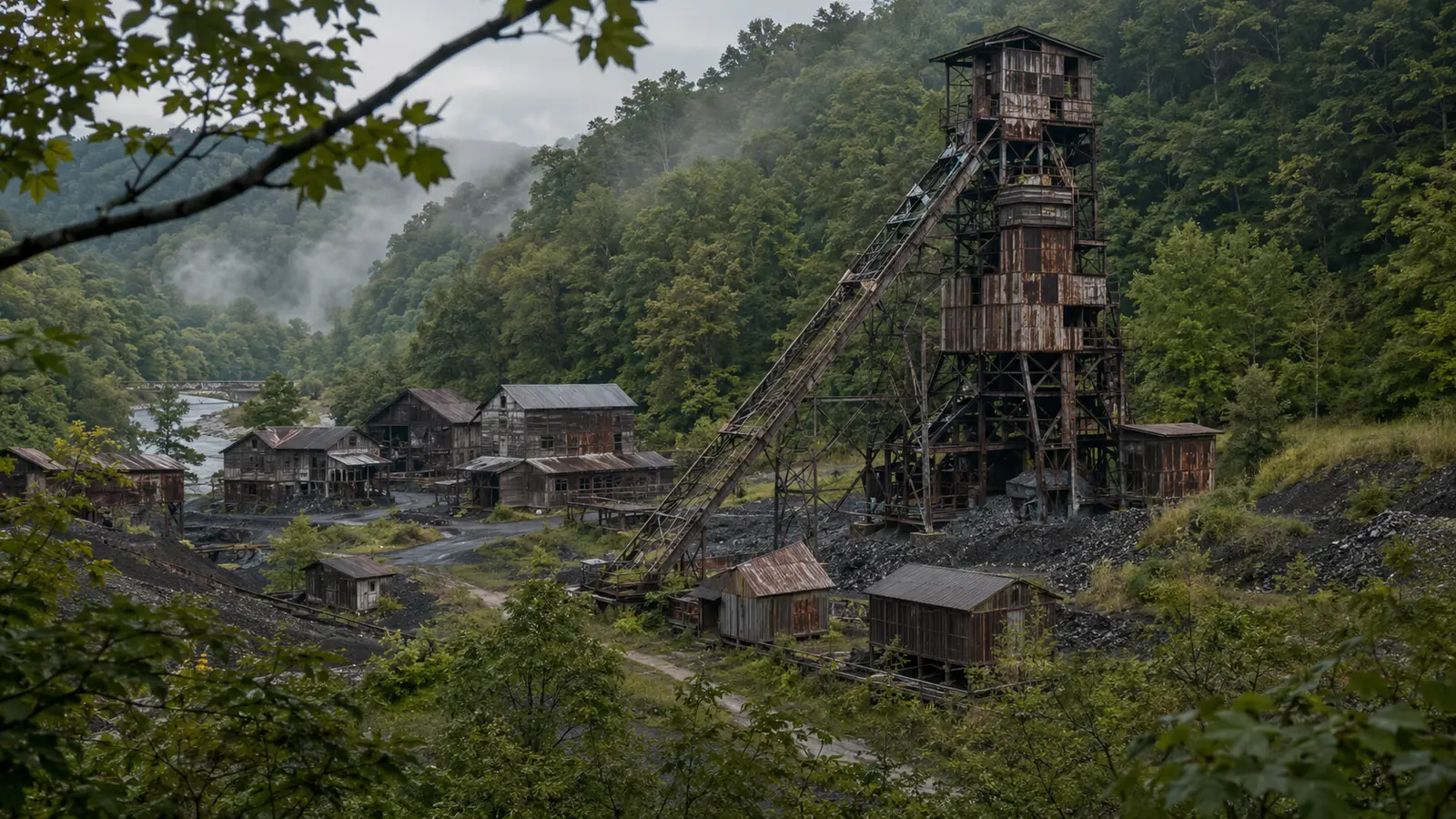
Blue Heron is interpreted within Big South Fork National River and Recreation Area. Ghost structures outline former buildings, and recorded oral histories help restore human voices to the landscape.
Use the park’s current directions and accessibility information. Mining landscapes contain industrial hazards, so closed areas and structures should never be entered.
Why this story matters
Blue Heron demonstrates why abandoned industry should be interpreted through workers and families, not machinery alone. A company town was an economic system, but it was also a neighborhood.
Places like this are often reduced to a single dramatic label—ghost town, ruin, failure—but the physical remains tell a more complicated story. Economic decisions, transportation networks, natural resources and public policy all shape whether a community grows, adapts or disappears. Reading the landscape carefully means remembering that these were workplaces and homes before they became destinations.
Primary reference: National Park Service — Blue Heron. This article summarizes public-history information in original language and adds editorial context; it does not reproduce the source text.