At a glance: A former Lake Michigan lumber settlement where forest and dunes conceal most visible traces.
Near Otter Creek, beach and forest now occupy ground that once held a mill, dock, stores and homes. Aral is a vanished town whose story is easier to read through the environment than through standing buildings.
How the place took shape
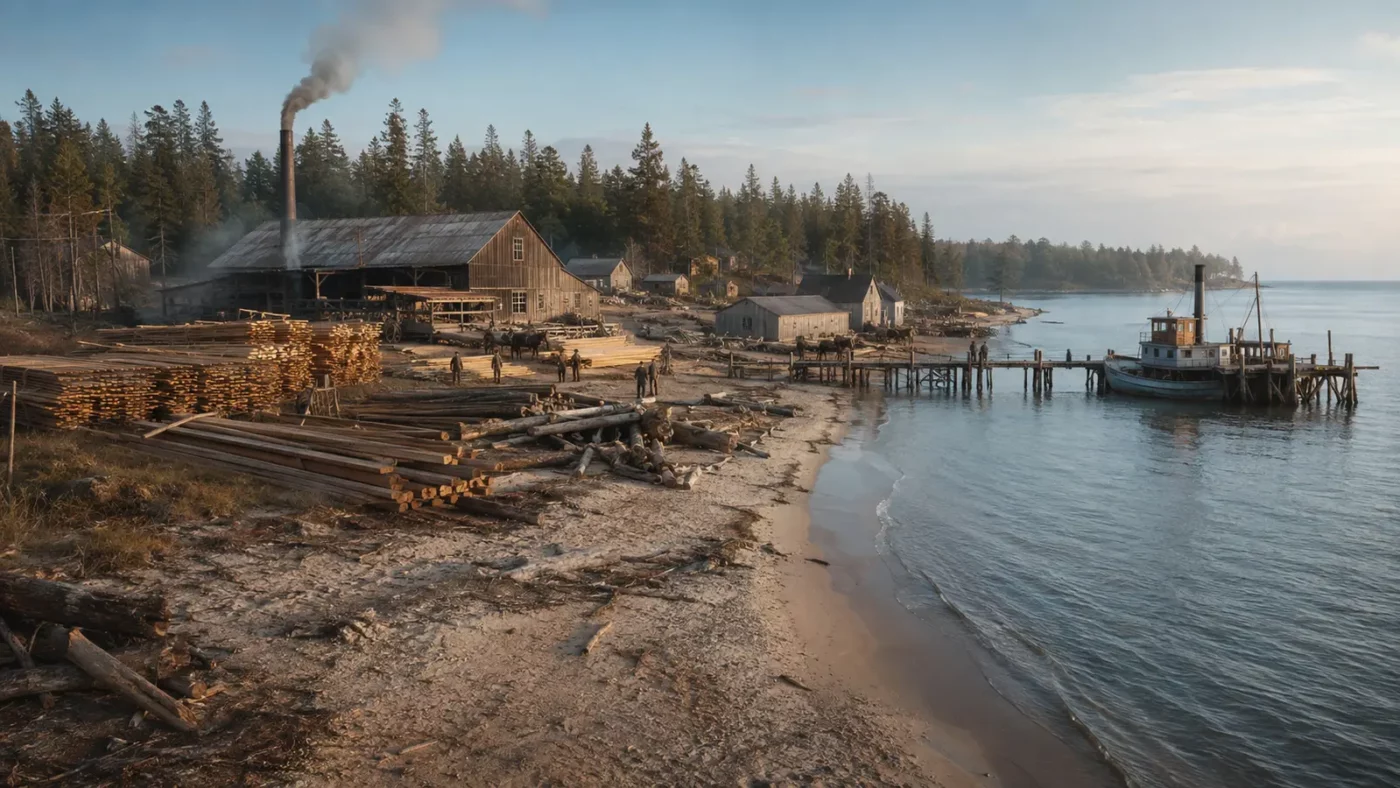
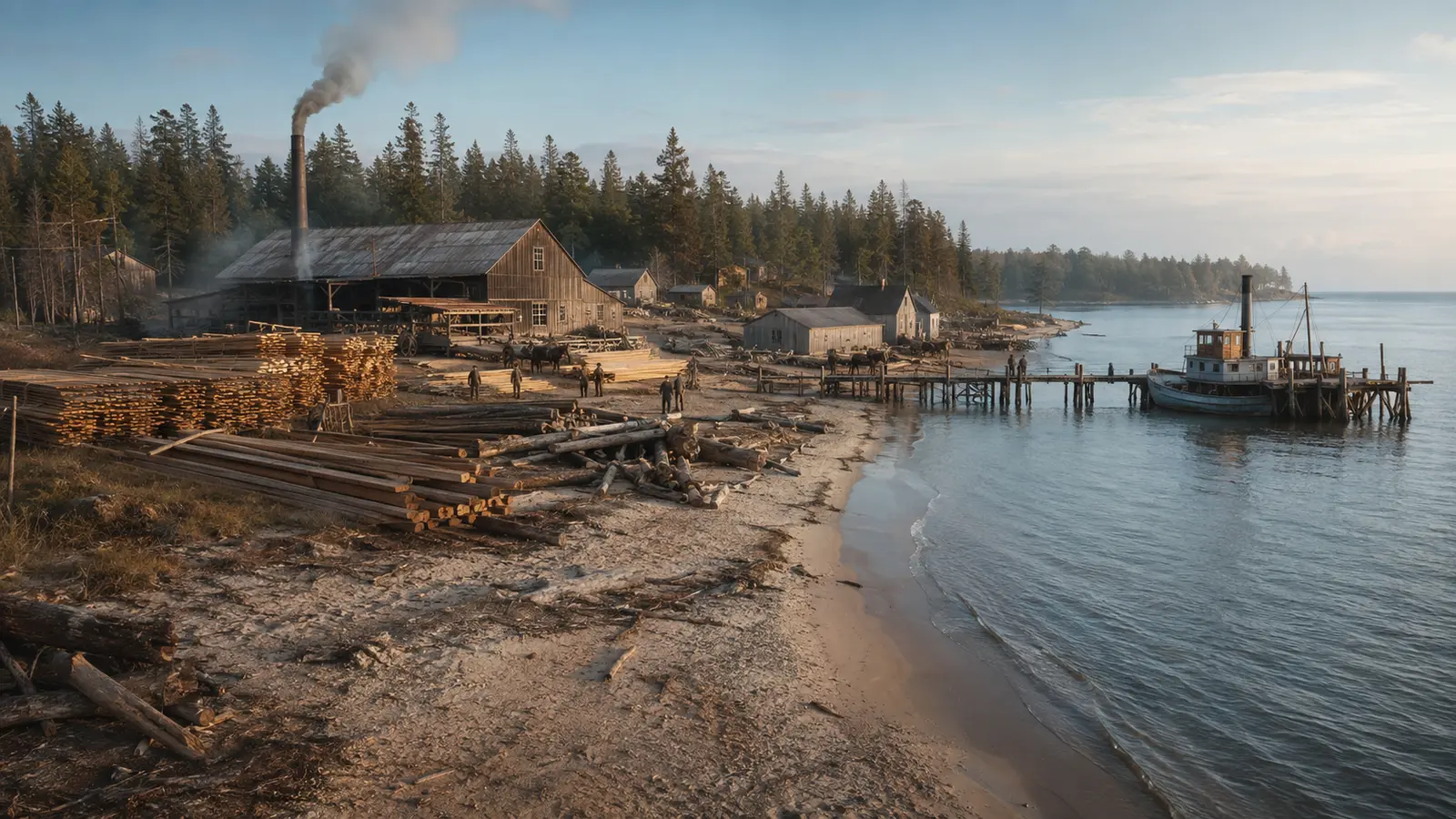
A steam-powered sawmill became the center of the settlement. Sailing ships and steam barges used the Lake Michigan dock to carry lumber toward growing cities and prairie markets.
The mill connected local timber to distant construction. Workers and families created a community around an industry that treated the surrounding forest as both resource and timetable.
Why the community changed
Aral declined after the timber supply was exhausted. Once the forest that supported the sawmill had been cut, the town lost the economic reason for its location.
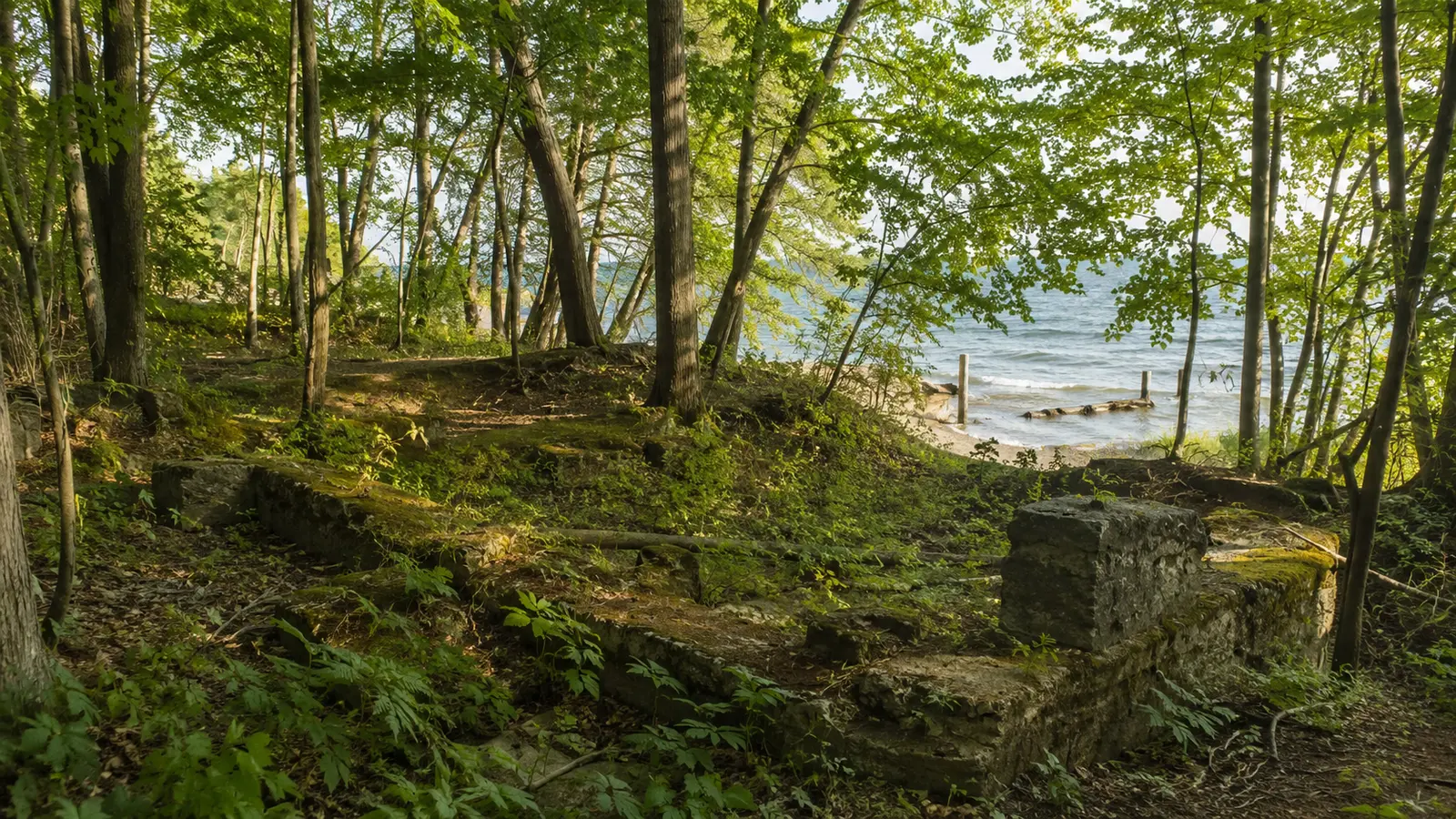
Buildings vanished and vegetation returned, reversing the visual signs of settlement. The modern forest can make the industrial scale of the former landscape difficult to imagine.
What remains today
The town site is interpreted within Sleeping Bear Dunes National Lakeshore. Only limited traces remain, so wayside information and historical photographs are essential parts of the experience.
Treat the area as both natural habitat and cultural landscape. Follow park rules, leave artifacts in place and avoid disturbing archaeological evidence.
Why this story matters
Aral illustrates a recurring pattern in resource towns: rapid growth can be built on a resource that cannot sustain the community indefinitely. The returning trees are part of the history, not an absence of it.
Places like this are often reduced to a single dramatic label—ghost town, ruin, failure—but the physical remains tell a more complicated story. Economic decisions, transportation networks, natural resources and public policy all shape whether a community grows, adapts or disappears. Reading the landscape carefully means remembering that these were workplaces and homes before they became destinations.
Primary reference: National Park Service — Aral: A Town That Vanished. This article summarizes public-history information in original language and adds editorial context; it does not reproduce the source text.