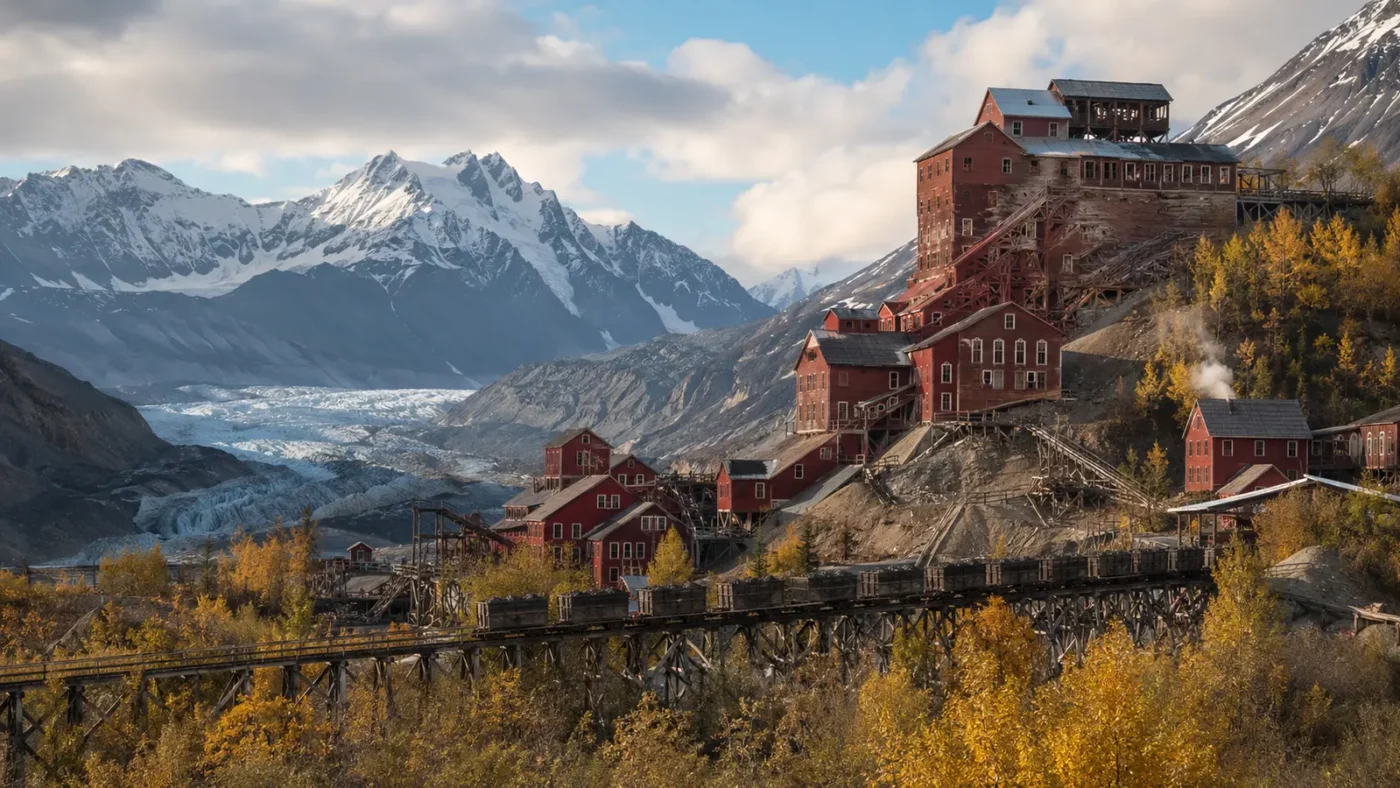
At a glance: A remarkably intact mining complex in the mountains of Wrangell–St. Elias.
The tall red mill buildings of Kennecott stand against glaciers and mountains, making the industrial site look almost impossible. Its location was chosen because extraordinary copper deposits justified extraordinary logistics.
How the place took shape
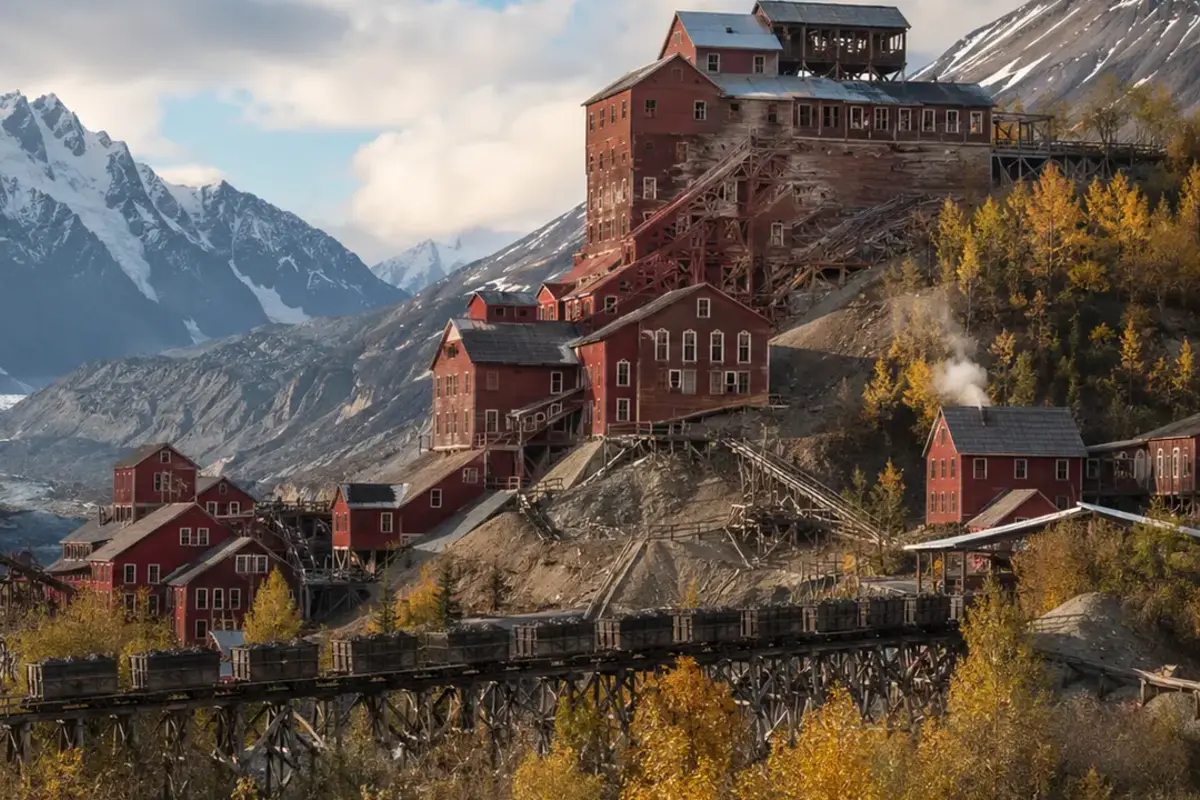
Mining companies developed the site in the early twentieth century and built a railroad to move ore to the coast. The complex combined mines, processing facilities, worker housing and services.
Life followed a strict industrial geography. Managers, workers and families occupied different spaces, while climate and remoteness made supply lines essential.
Why the community changed
As the richest ore was depleted and market conditions changed, the operation became less economical. The mines closed in 1938 and the company town rapidly emptied.
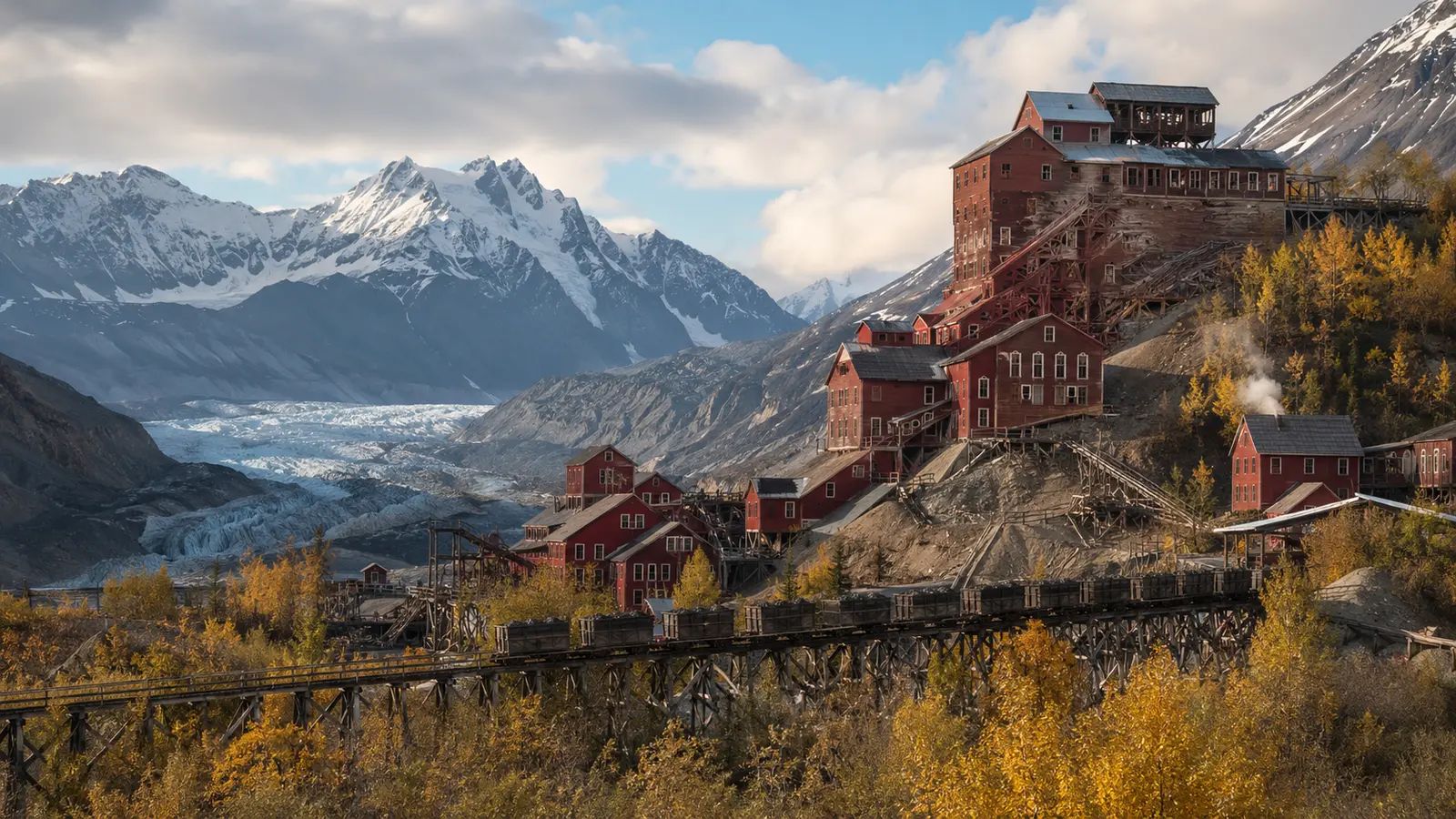
Machinery and buildings remained because removing everything from such a remote site was impractical. Abandonment preserved a large industrial landscape but also exposed it to weather and instability.
What remains today
Kennecott is now part of Wrangell–St. Elias National Park and Preserve. The park and partners stabilize structures and offer interpretation while retaining the site’s historic character.
Access requires planning, and many structures are closed or available only through authorized tours. Follow current park and concession information.
Why this story matters
Kennecott shows how industrial power can create a town in an unlikely place—and how quickly that town can lose purpose when extraction ends.
Places like this are often reduced to a single dramatic label—ghost town, ruin, failure—but the physical remains tell a more complicated story. Economic decisions, transportation networks, natural resources and public policy all shape whether a community grows, adapts or disappears. Reading the landscape carefully means remembering that these were workplaces and homes before they became destinations.
Primary reference: National Park Service — Kennecott Mines National Historic Landmark. This article summarizes public-history information in original language and adds editorial context; it does not reproduce the source text.