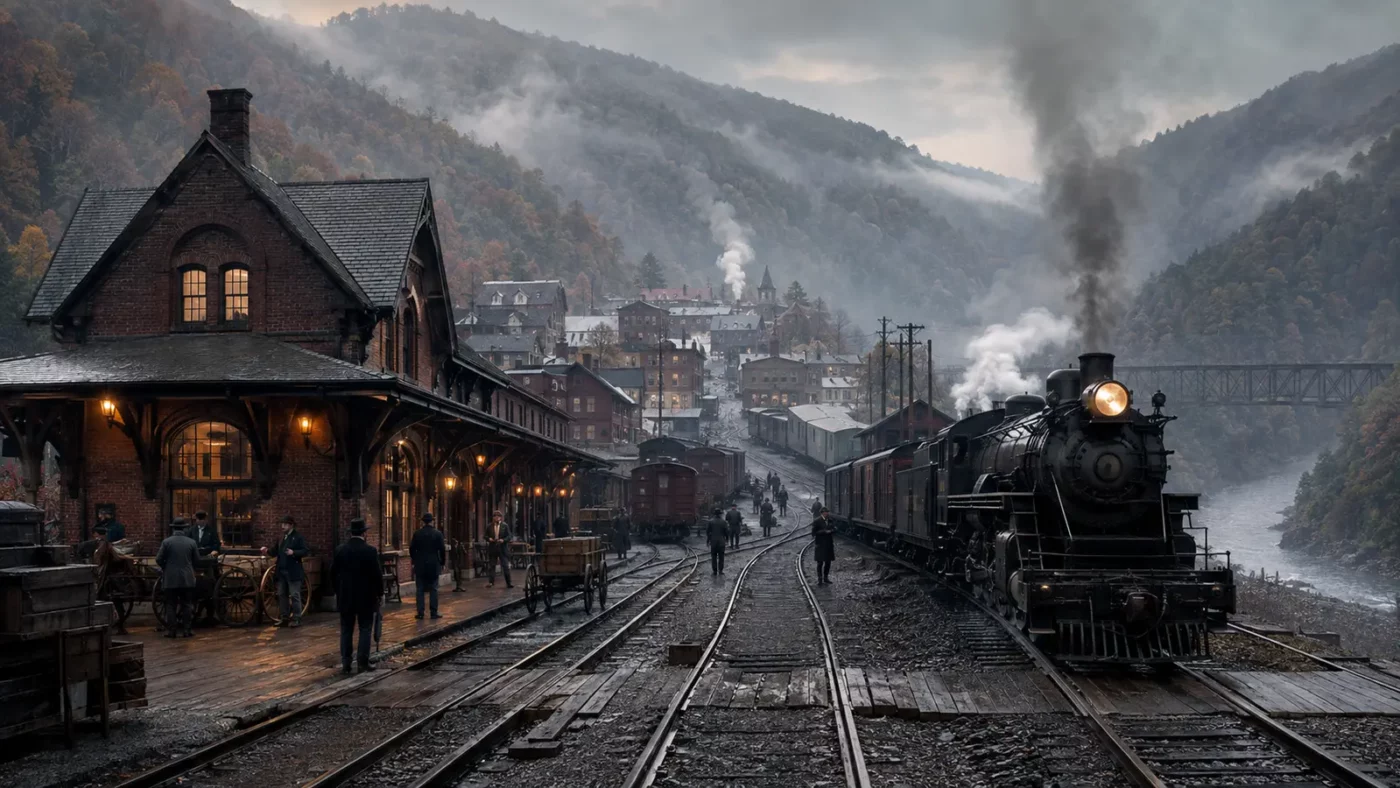
At a glance: A New River railroad town whose commercial district survives beside active tracks.
Thurmond’s buildings stand close to the railroad because rail traffic was the town’s reason for being. Coal, passengers and money passed through a narrow strip of land between river and mountain.
How the place took shape
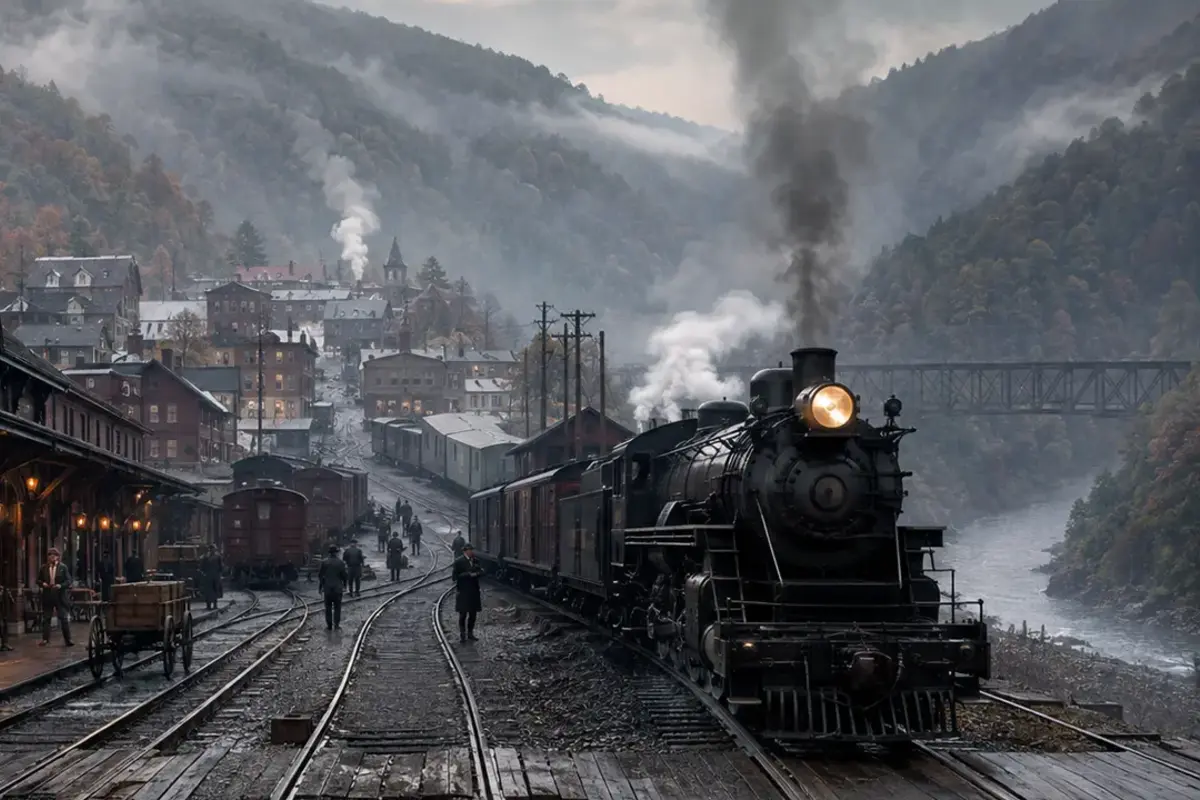
The Chesapeake and Ohio Railway made Thurmond an important operational and commercial point. Hotels, banks and businesses served railroad workers and the regional coal economy.
The town’s density reflected its terrain and transport network. Trains connected otherwise isolated communities and made local businesses viable.

Why the community changed
Diesel locomotives required different servicing than steam engines, roads improved and the coal economy changed. Passenger rail also declined, removing several foundations of local commerce.
Population fell across decades. Fires and business closures reduced the built environment, yet the surviving depot and commercial row retained the shape of the railroad era.
What remains today
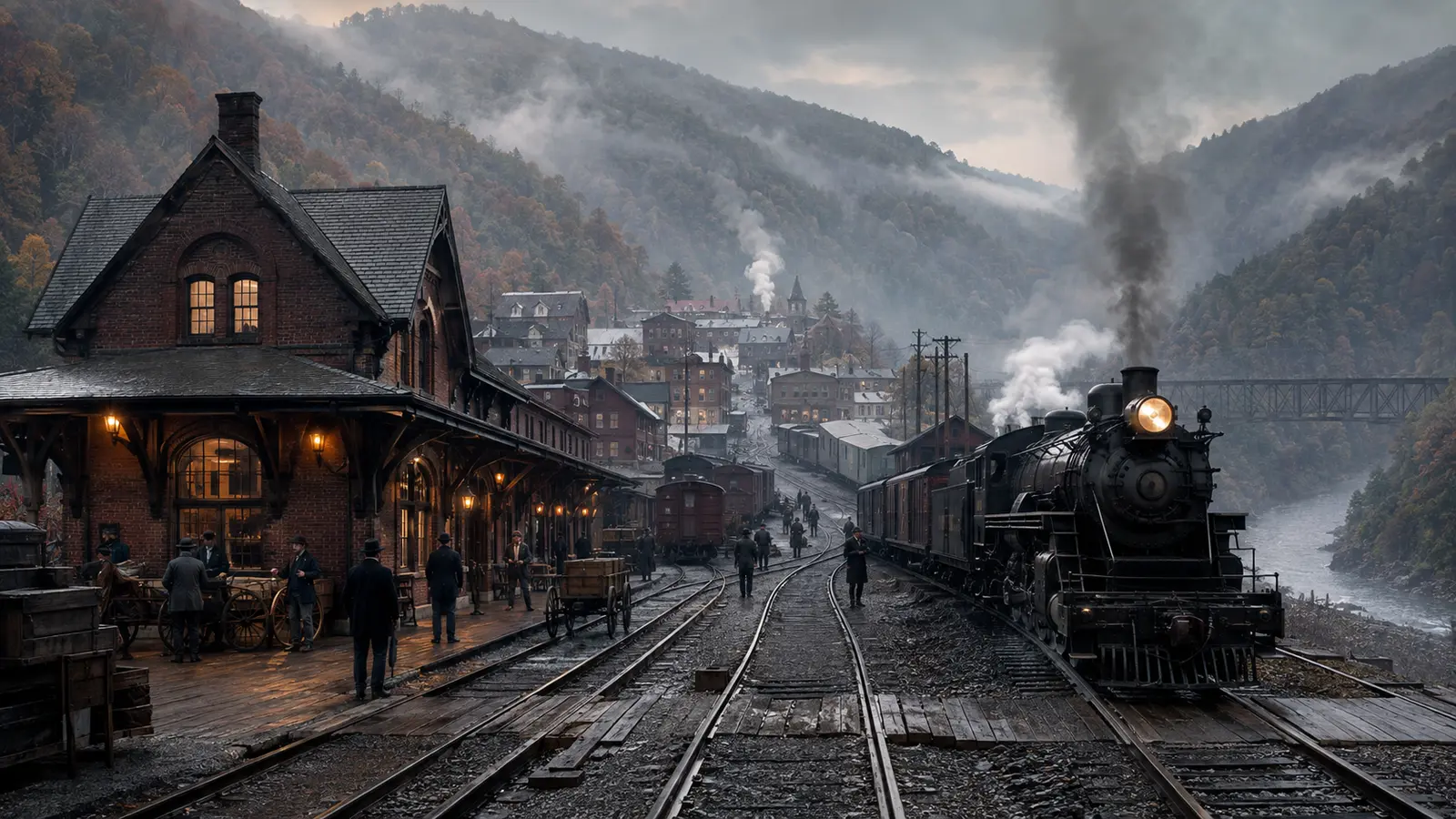
Thurmond lies within New River Gorge National Park and Preserve. The restored depot serves as a visitor contact station, and trains still use the corridor.
Tracks are active and must be treated accordingly. Visitors should use designated crossings, parking and park guidance.
Why this story matters
Thurmond makes technological change visible. When a transport technology changes, the towns built around its maintenance needs can change with it.
Places like this are often reduced to a single dramatic label—ghost town, ruin, failure—but the physical remains tell a more complicated story. Economic decisions, transportation networks, natural resources and public policy all shape whether a community grows, adapts or disappears. Reading the landscape carefully means remembering that these were workplaces and homes before they became destinations.
Primary reference: National Park Service — Thurmond. This article summarizes public-history information in original language and adds editorial context; it does not reproduce the source text.