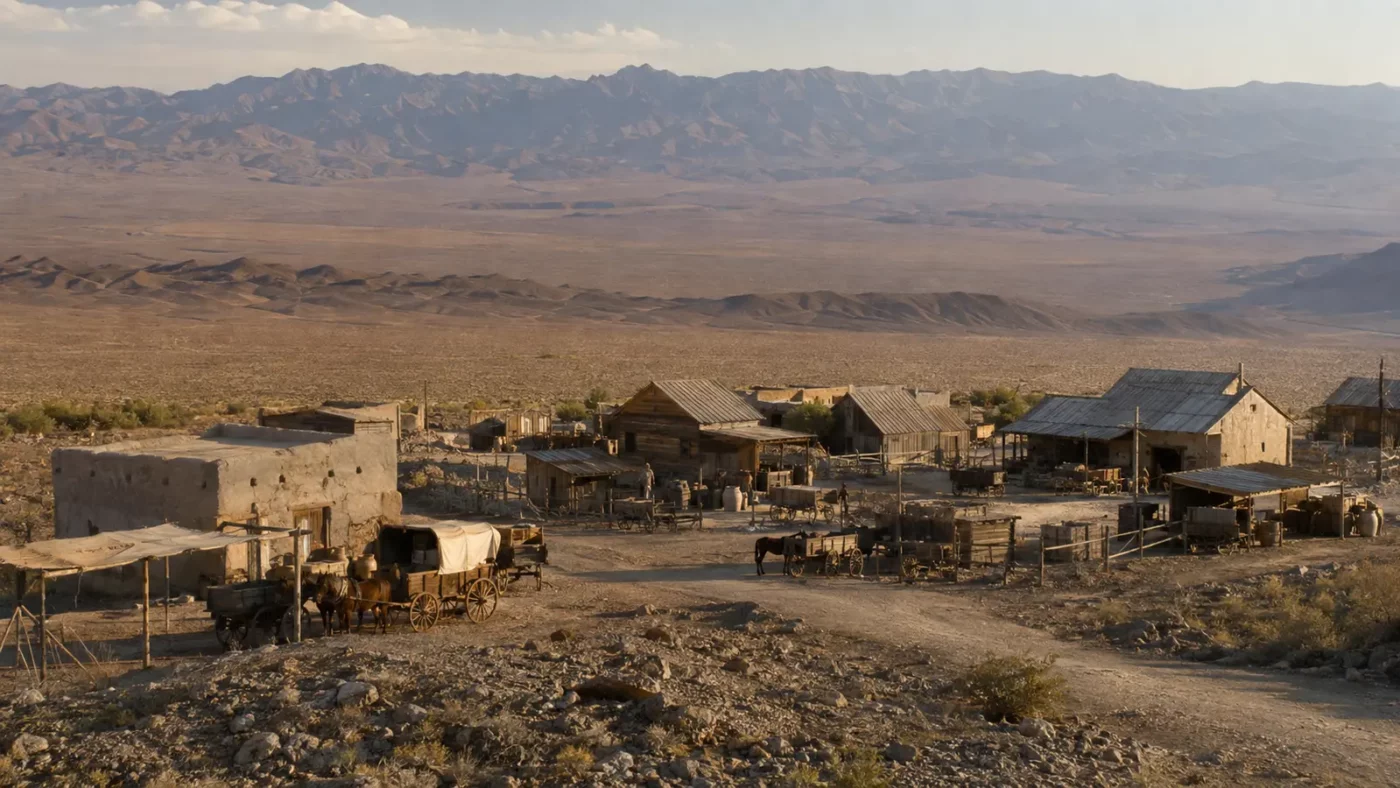
At a glance: Adobe ruins and a surviving desert outpost linked to nearby gold camps.
Ballarat sits in the Panamint Valley, where its modest remains contrast with the harsh scale of the desert. The settlement served mines rather than being built directly on one great deposit.
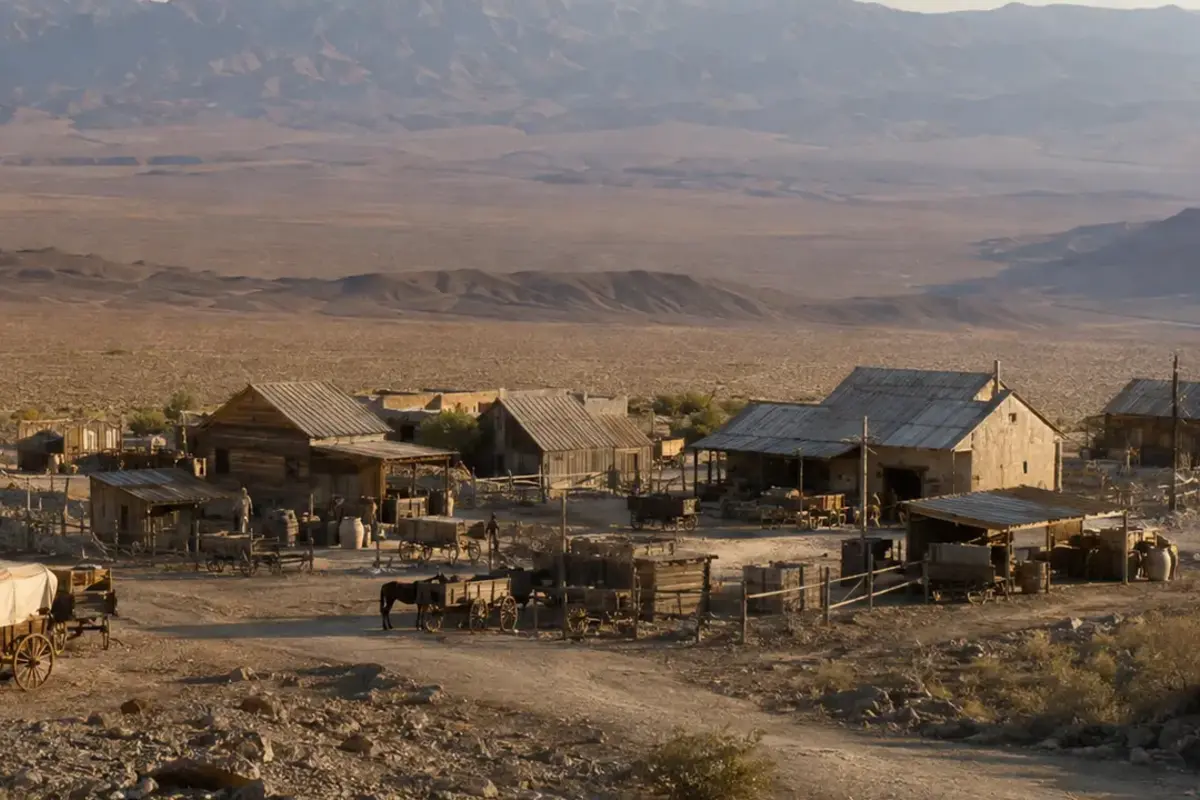
How the place took shape
Founded during the 1890s mining cycle, Ballarat supplied nearby operations with goods, mail and gathering places. Its fortunes depended on multiple camps in the Panamint Mountains.
Hundreds of residents used the town as a practical center. Teamsters, miners, merchants and travelers relied on water and transport across long distances.
Why the community changed
As surrounding mines declined after the turn of the century, Ballarat’s customer base contracted. The town lost population and most services.
Some structures and local activity persisted, preventing a neat boundary between living town and abandoned place. This ambiguity is common in places labeled ghost towns.
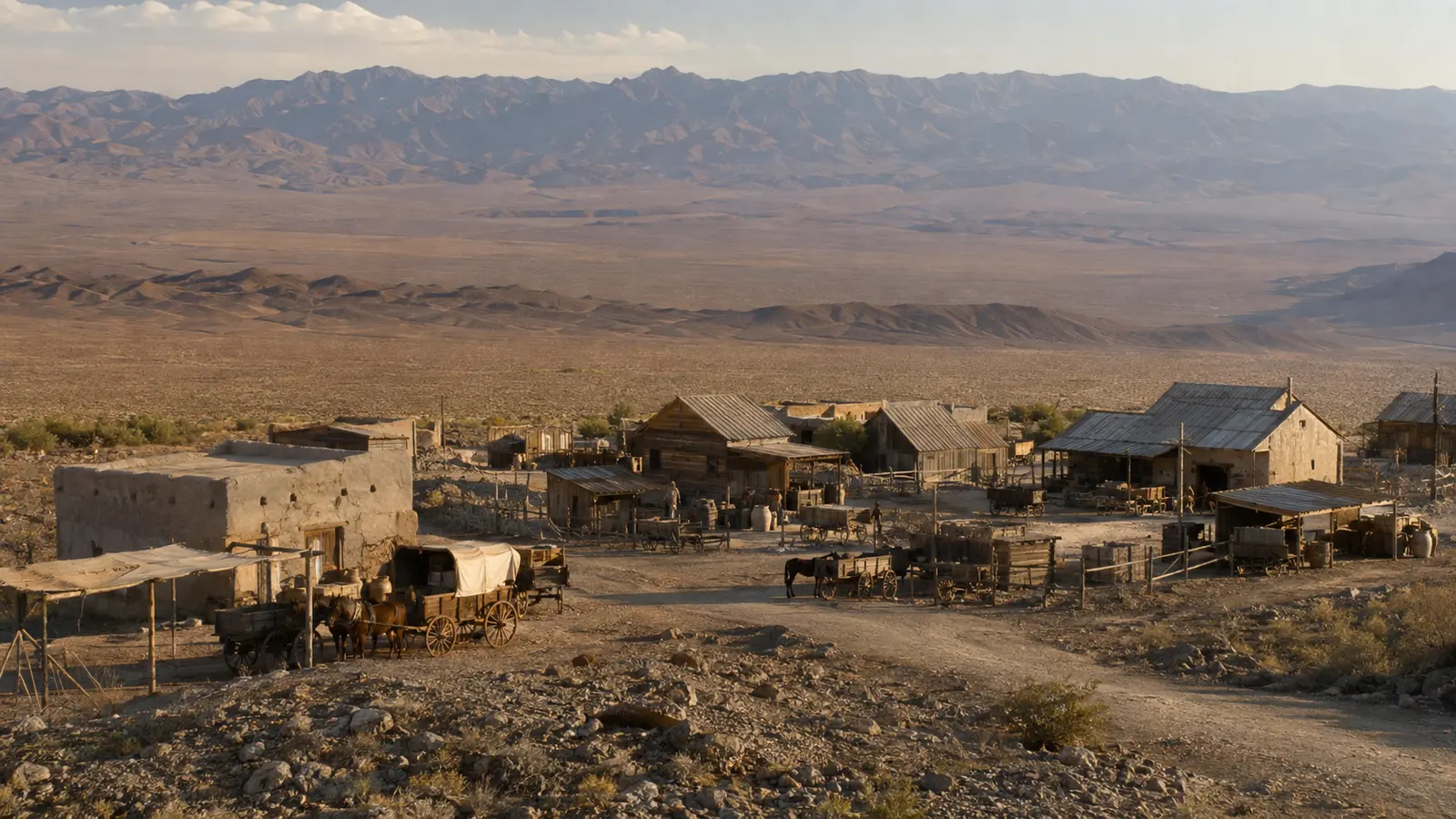
What remains today
The National Park Service describes Ballarat among the ghost towns associated with Death Valley, while much of the town site is privately owned.
Private ownership is crucial: visitors must respect posted rules, purchase expectations and boundaries. Desert travel requires water, fuel and weather awareness.
Why this story matters
Ballarat reminds us that service towns can vanish even without a mine of their own. Their survival rests on the wider network they support.
Places like this are often reduced to a single dramatic label—ghost town, ruin, failure—but the physical remains tell a more complicated story. Economic decisions, transportation networks, natural resources and public policy all shape whether a community grows, adapts or disappears. Reading the landscape carefully means remembering that these were workplaces and homes before they became destinations.
Primary reference: National Park Service — Death Valley Ghost Towns. This article summarizes public-history information in original language and adds editorial context; it does not reproduce the source text.