At a glance: A short-lived port and trailhead transformed by the Klondike Gold Rush and transportation competition.
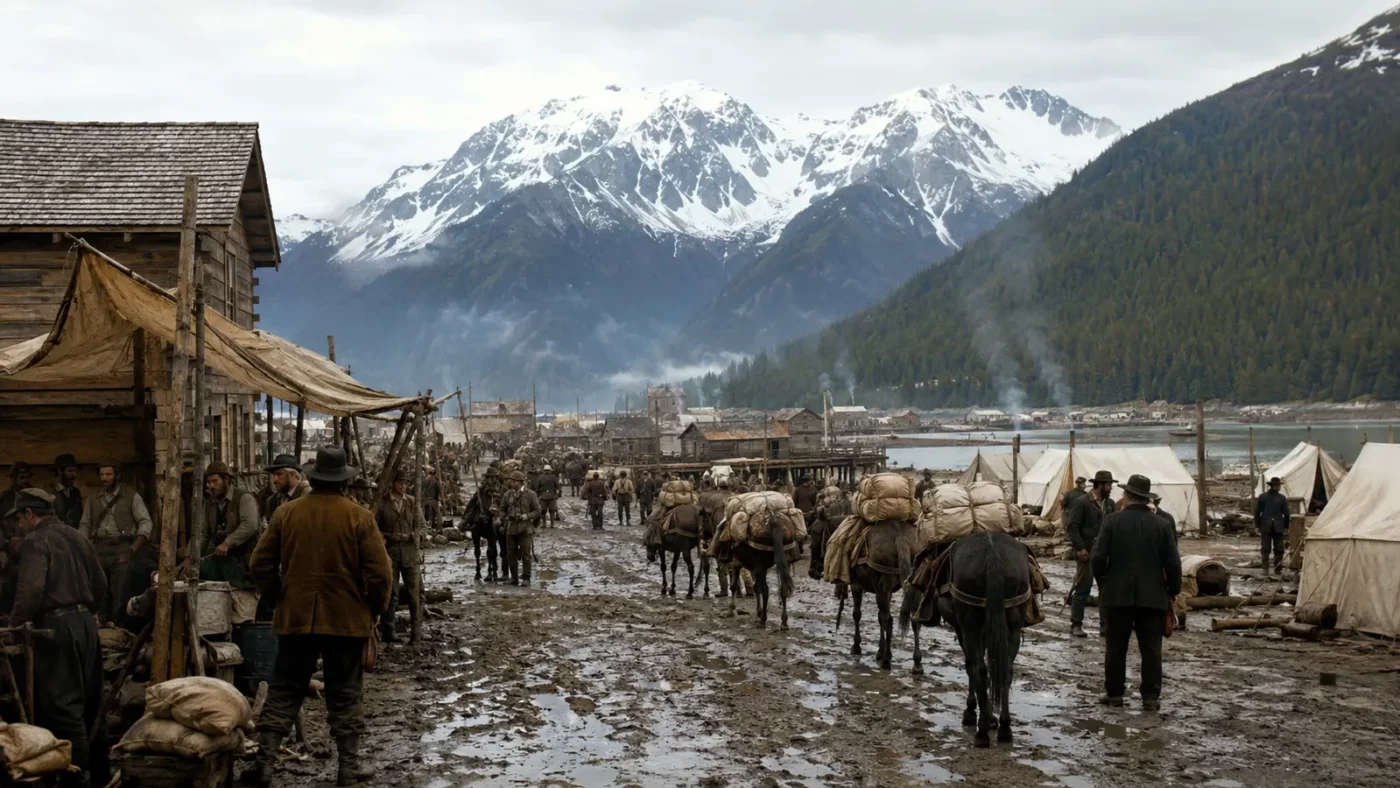
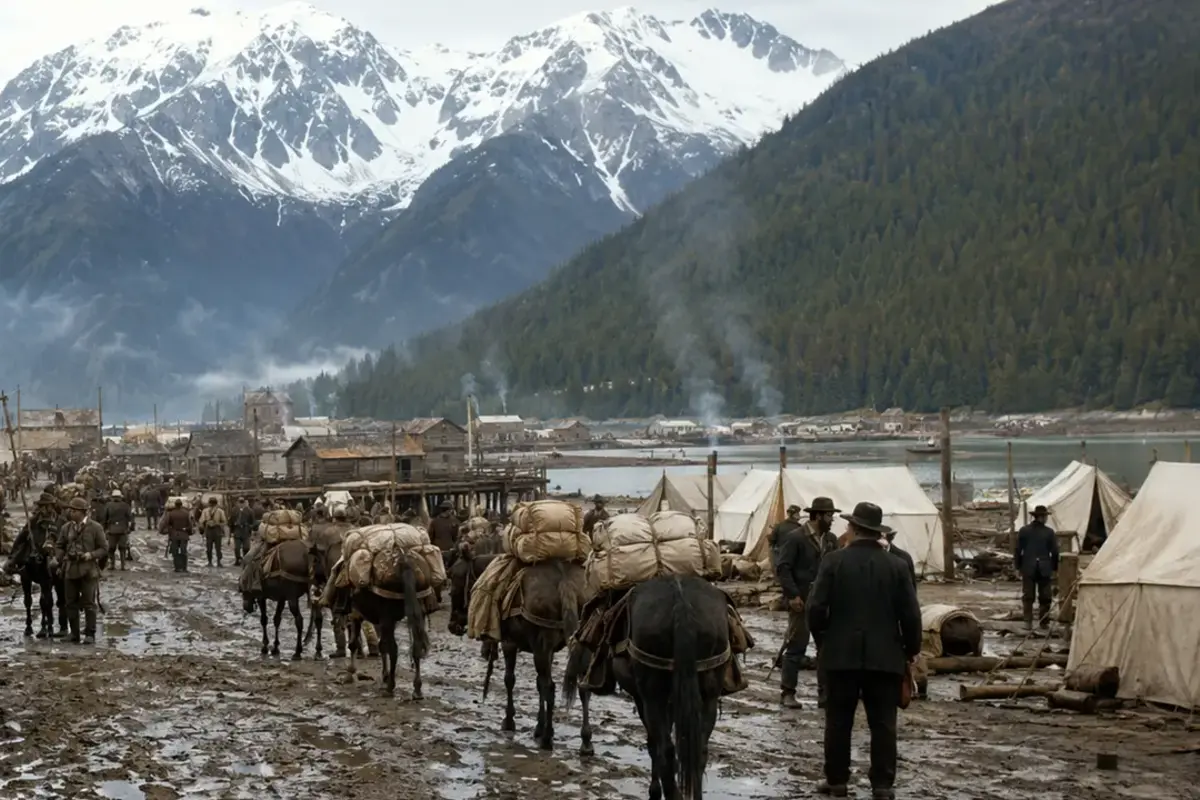
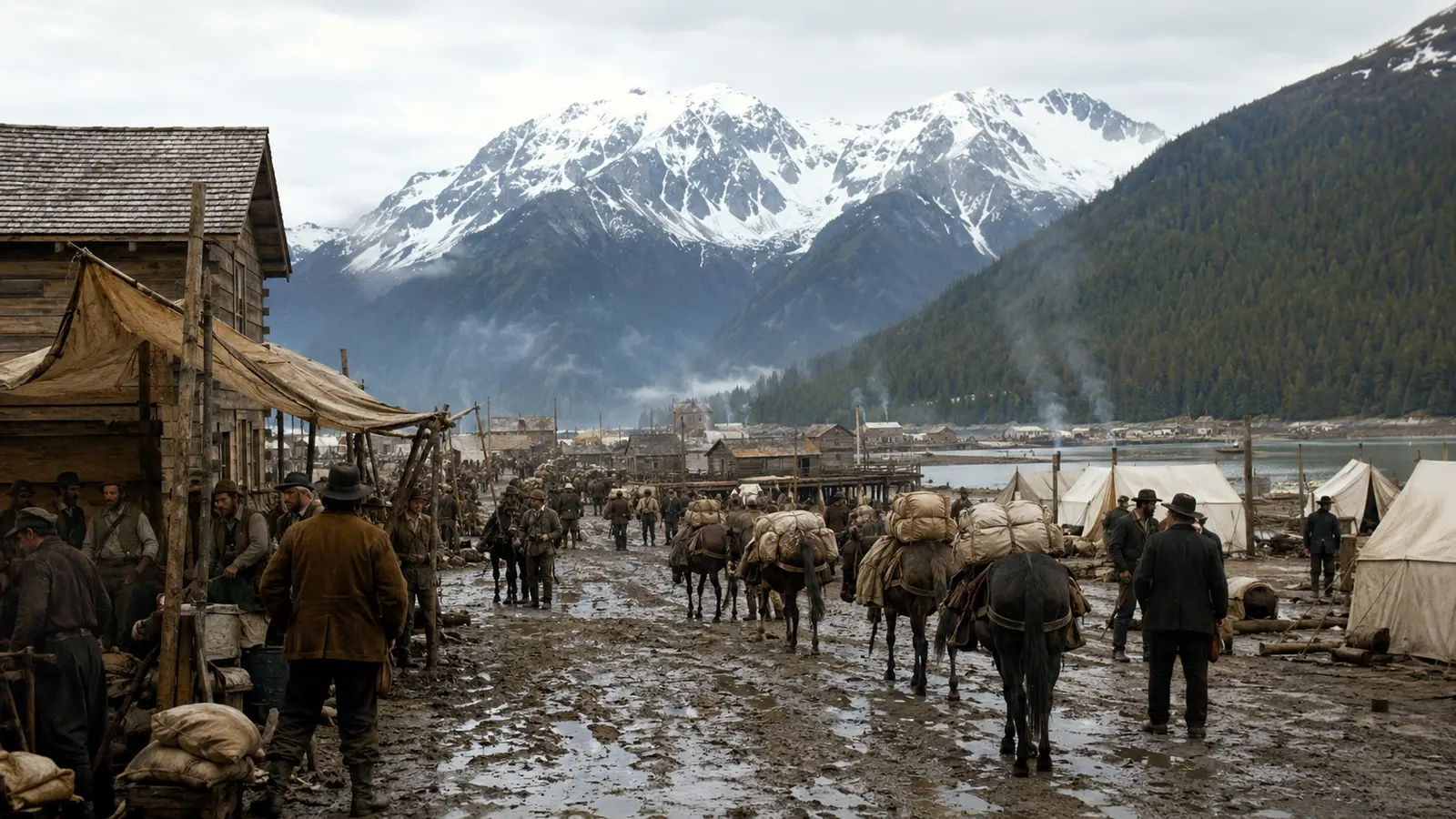
Forest and tidal flats now surround Dyea, but in 1897 and 1898 the place was crowded with people and supplies moving toward the Klondike. Its rapid rise was matched by an equally dramatic decline.
How the place took shape
Gold-seekers used Dyea as a gateway to the Chilkoot Trail. Merchants, freight handlers and lodging businesses served thousands preparing for a difficult journey over the mountains.
The boom created intense, improvised urban life in a challenging environment. Prices, transport capacity and weather shaped nearly every decision made by travelers and residents.
Why the community changed
A deadly avalanche on the Chilkoot Trail, changing gold-rush traffic and competition from neighboring Skagway’s railroad undermined Dyea’s position. The transport system favored a different gateway.
Businesses and residents moved away as quickly as they had arrived. Wood structures deteriorated, river channels shifted and vegetation reclaimed much of the town plan.
What remains today
Dyea is protected within Klondike Gold Rush National Historical Park. Wayside exhibits and archaeological traces help visitors understand a town that is now more visible in maps than buildings.
The landscape is dynamic and includes wildlife, tidal conditions and fragile resources. Current park guidance and local transport information should shape any visit.
Why this story matters
Dyea reveals that boomtown survival depended not only on gold but on logistics. A better route or railroad could determine which settlement endured.
Places like this are often reduced to a single dramatic label—ghost town, ruin, failure—but the physical remains tell a more complicated story. Economic decisions, transportation networks, natural resources and public policy all shape whether a community grows, adapts or disappears. Reading the landscape carefully means remembering that these were workplaces and homes before they became destinations.
Primary reference: National Park Service — Dyea Waysides. This article summarizes public-history information in original language and adds editorial context; it does not reproduce the source text.