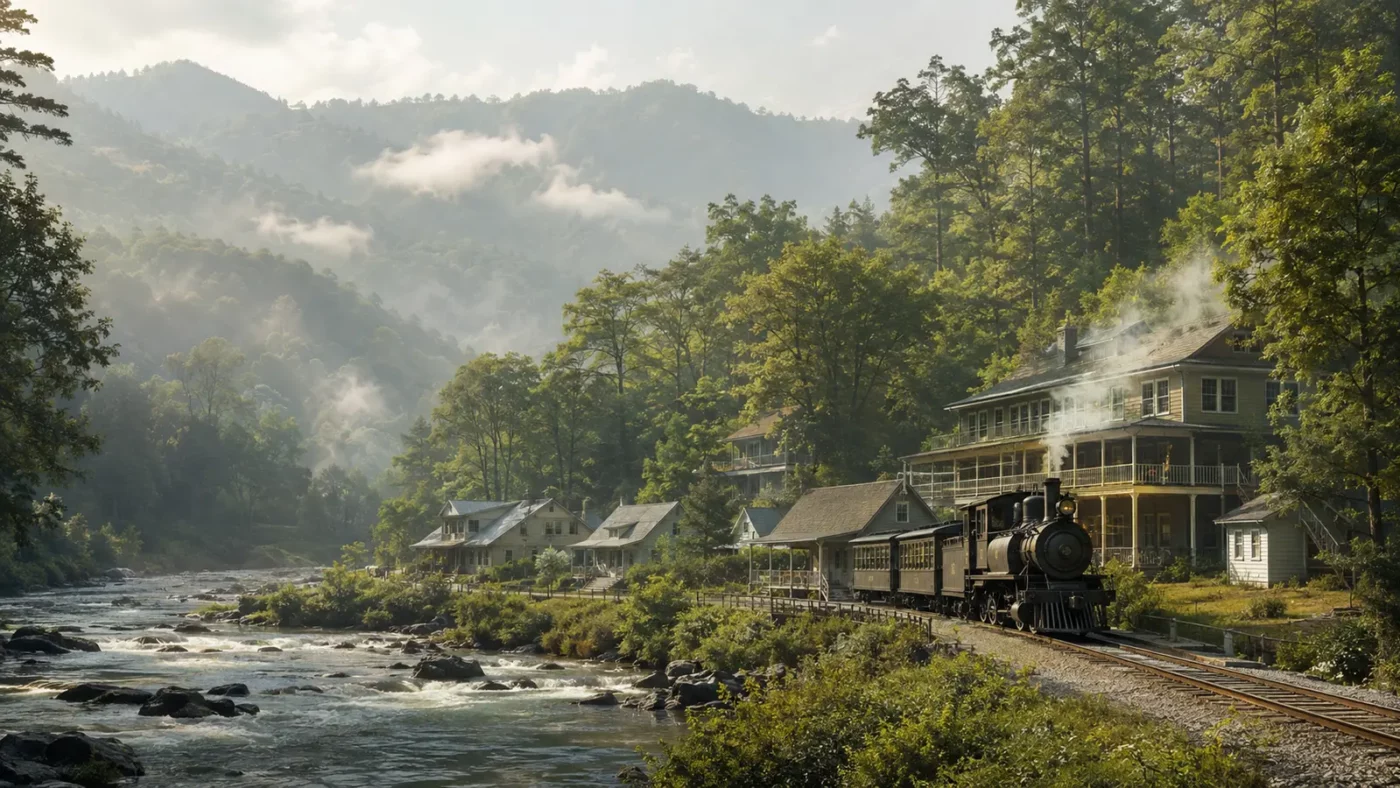
At a glance: A Smoky Mountains community shaped first by timber and later by tourism.
Elkmont’s preserved structures tell more than one story. The area shifted from industrial logging settlement to seasonal resort before becoming part of a national park.
How the place took shape
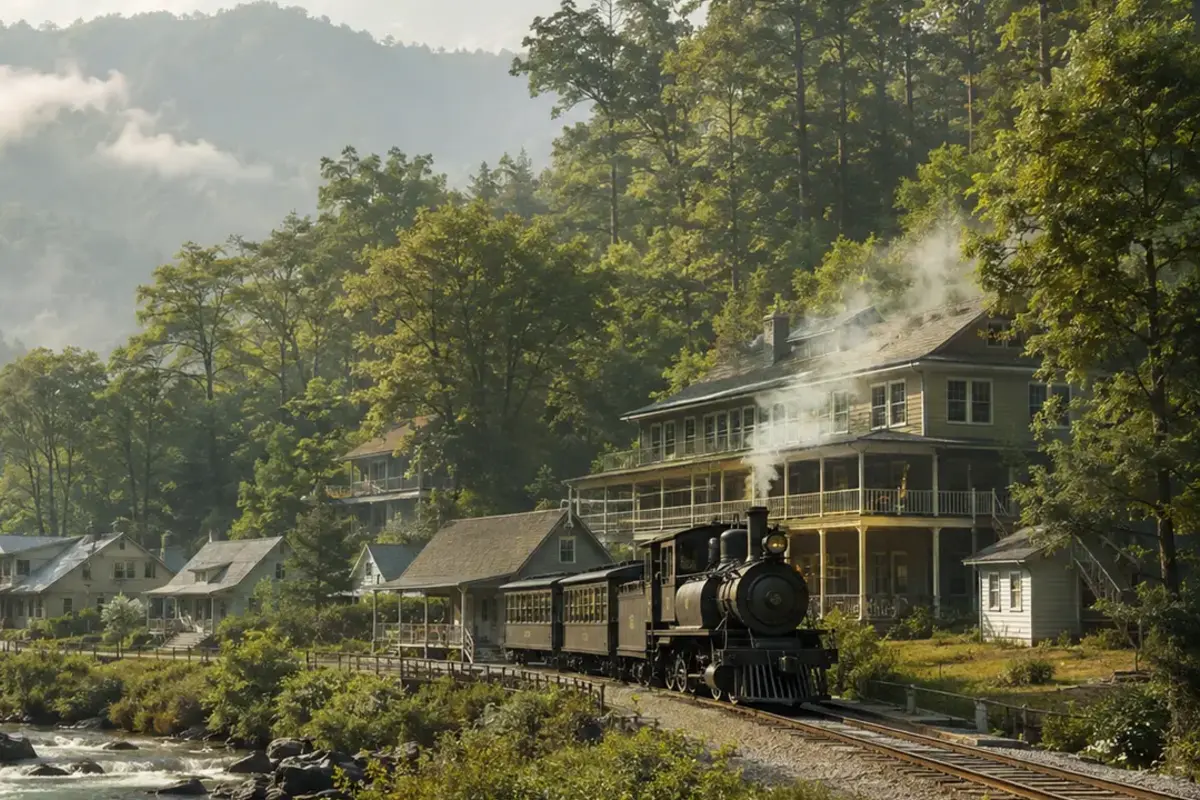
Logging operations and a railroad brought workers into the Little River valley. As timber activity changed, rail access also encouraged Knoxville families to establish vacation communities.
Hotels, clubs and cottages created a social landscape different from the earlier industrial camp. Several groups used the valley in distinct ways.
Why the community changed
Creation of Great Smoky Mountains National Park brought property acquisition and leases. Many buildings were eventually removed or deteriorated after leases ended.
Public debate over preservation led to the retention and rehabilitation of selected structures, showing that park landscapes also contain contested human history.
What remains today
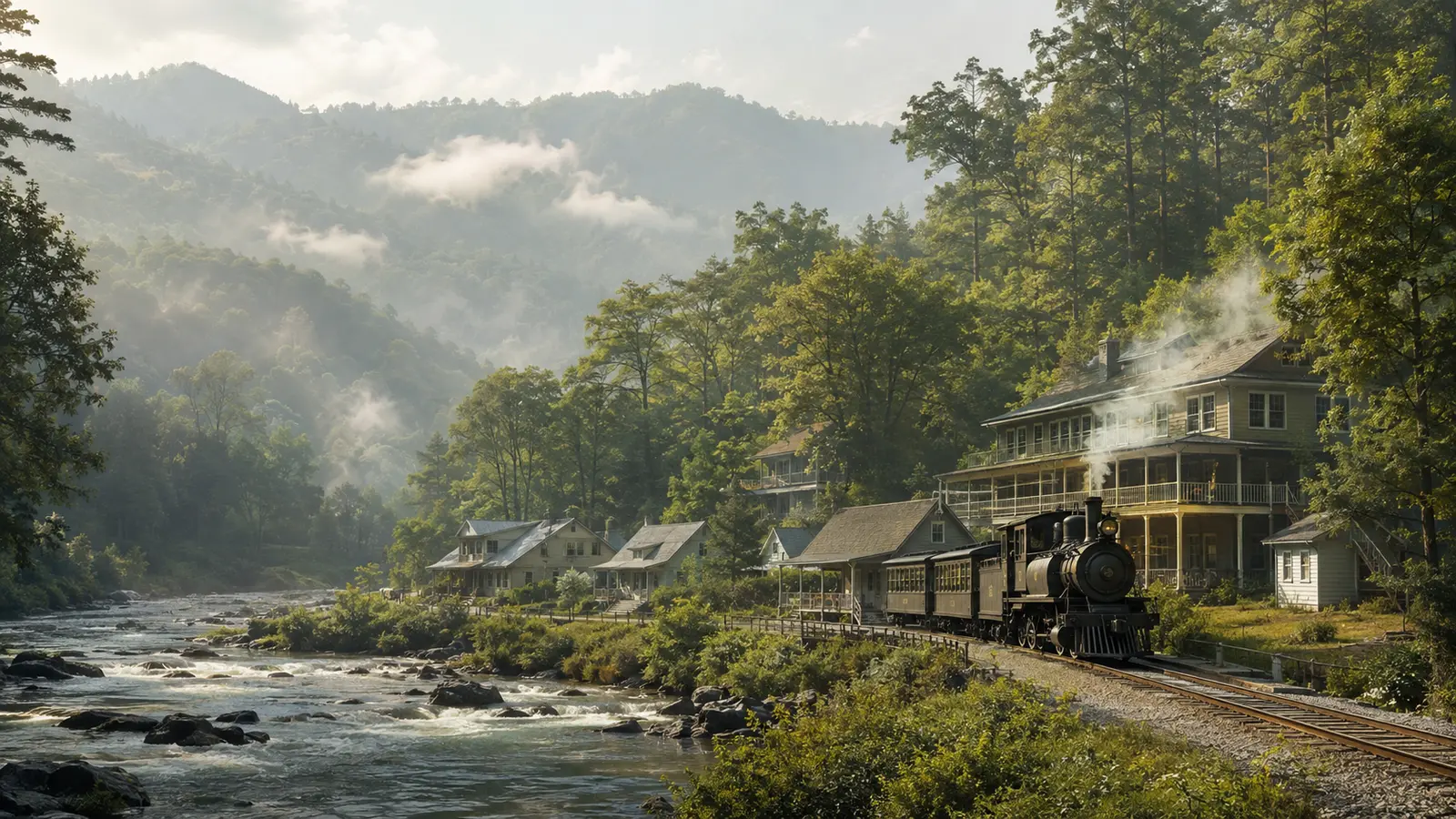
The National Park Service preserves the Elkmont Historic District and interprets surviving cabins and community buildings.
Use designated paths and obey building closures. The area is habitat as well as historic landscape, so food, wildlife and camping regulations matter.
Why this story matters
Elkmont challenges the idea that national parks are untouched wilderness. Conservation often overlays earlier communities, industries and private landscapes.
Places like this are often reduced to a single dramatic label—ghost town, ruin, failure—but the physical remains tell a more complicated story. Economic decisions, transportation networks, natural resources and public policy all shape whether a community grows, adapts or disappears. Reading the landscape carefully means remembering that these were workplaces and homes before they became destinations.
Primary reference: National Park Service — Old Town of Elkmont. This article summarizes public-history information in original language and adds editorial context; it does not reproduce the source text.