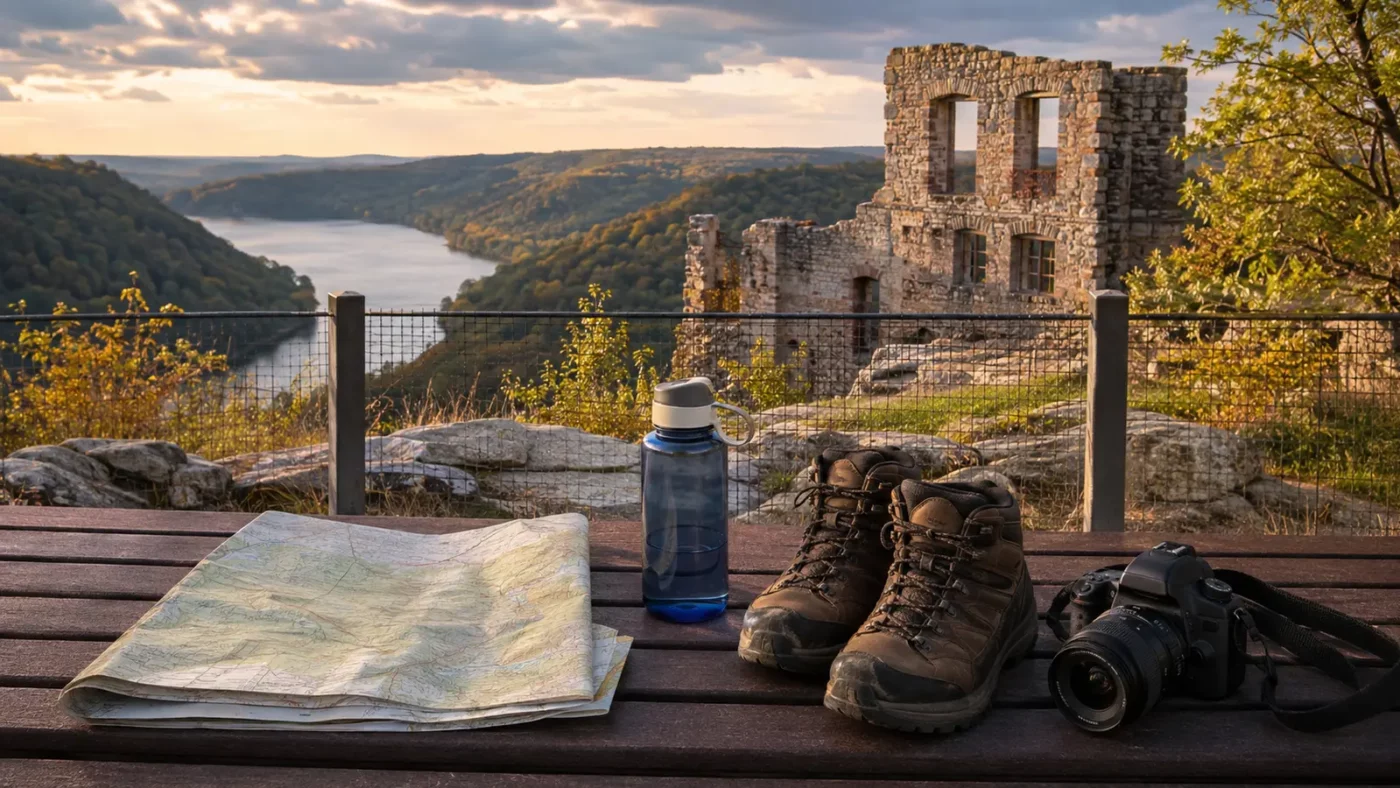
At a glance: A field guide to access, safety, preservation and respectful photography.
The word abandoned describes appearance, not ownership. A vacant building can be privately owned, actively monitored, structurally unstable or protected as an archaeological resource.
How the place took shape
Begin with an official park, land agency or historic-site page. Determine who manages the location, whether public access exists and which roads or trails are open.
Carry conditions appropriate to the landscape. Desert heat, flash floods, wildlife, mine openings, contaminated industrial materials and collapsing floors are not solved by photography experience.
Why the community changed
Never climb barriers, force entry, remove objects, reveal sensitive archaeological coordinates or treat nearby residents as scenery. If access is unclear, do not enter.
Photographs made from lawful public areas can still tell a strong story. Historic maps and archive images often add more meaning than risky interior shots.
What remains today
Protected sites may use closures to prevent irreversible deterioration. Respecting a closure is part of preserving the place for future research.
The National Park Service provides a directory of abandoned places that can be visited through managed public sites.
Why this story matters
Check conditions on the day of travel. Permissions and emergency resources should be arranged before reaching areas with weak mobile service.
Places like this are often reduced to a single dramatic label—ghost town, ruin, failure—but the physical remains tell a more complicated story. Economic decisions, transportation networks, natural resources and public policy all shape whether a community grows, adapts or disappears. Reading the landscape carefully means remembering that these were workplaces and homes before they became destinations.
Primary reference: https://www.nps.gov/subjects/abandonedplaces/visit.htm. This article summarizes public-history information in original language and adds editorial context; it does not reproduce the source text.