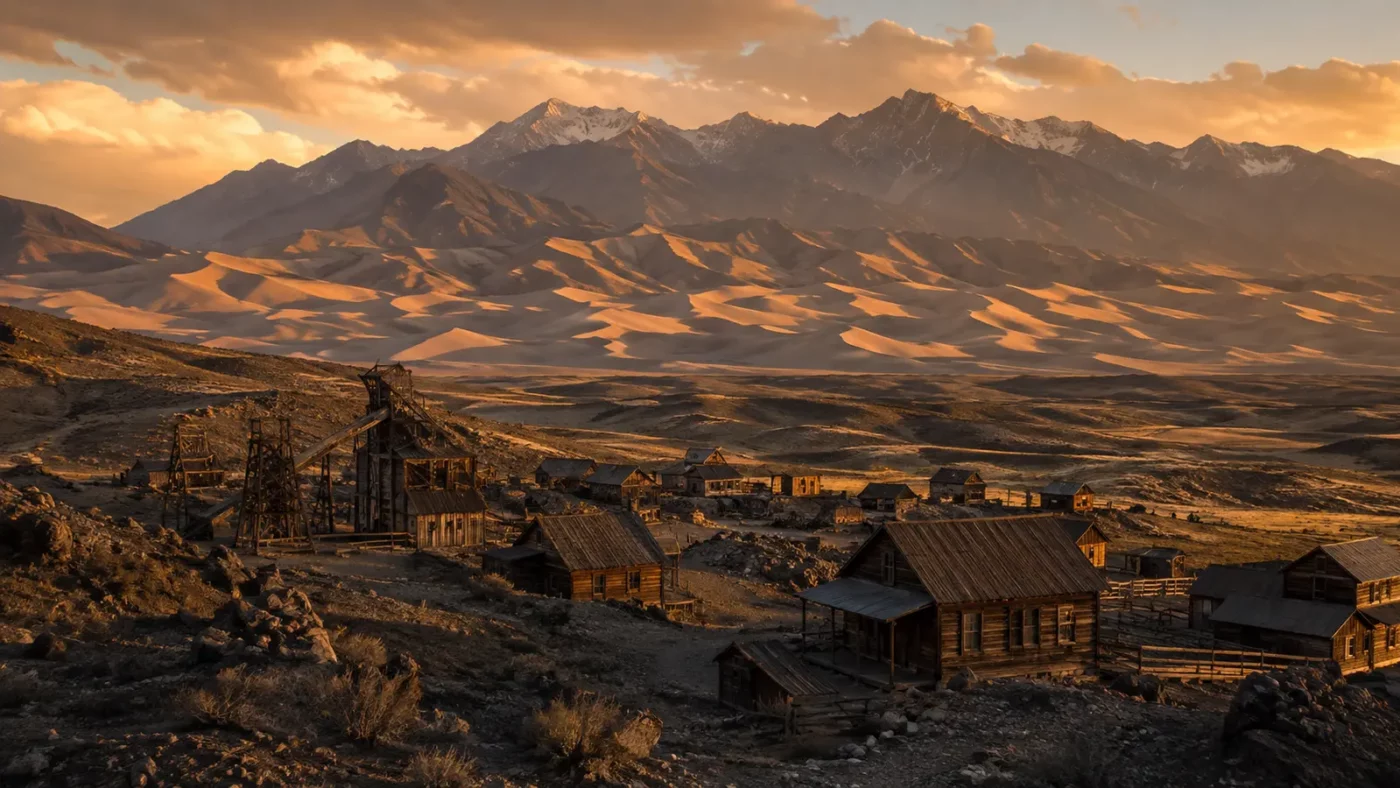
At a glance: Former mining communities whose scattered traces sit near the Sangre de Cristo Mountains.
The dunes and mountains dominate the modern landscape, but photographs and foundations reveal communities once built around promises of nearby mineral wealth.
How the place took shape
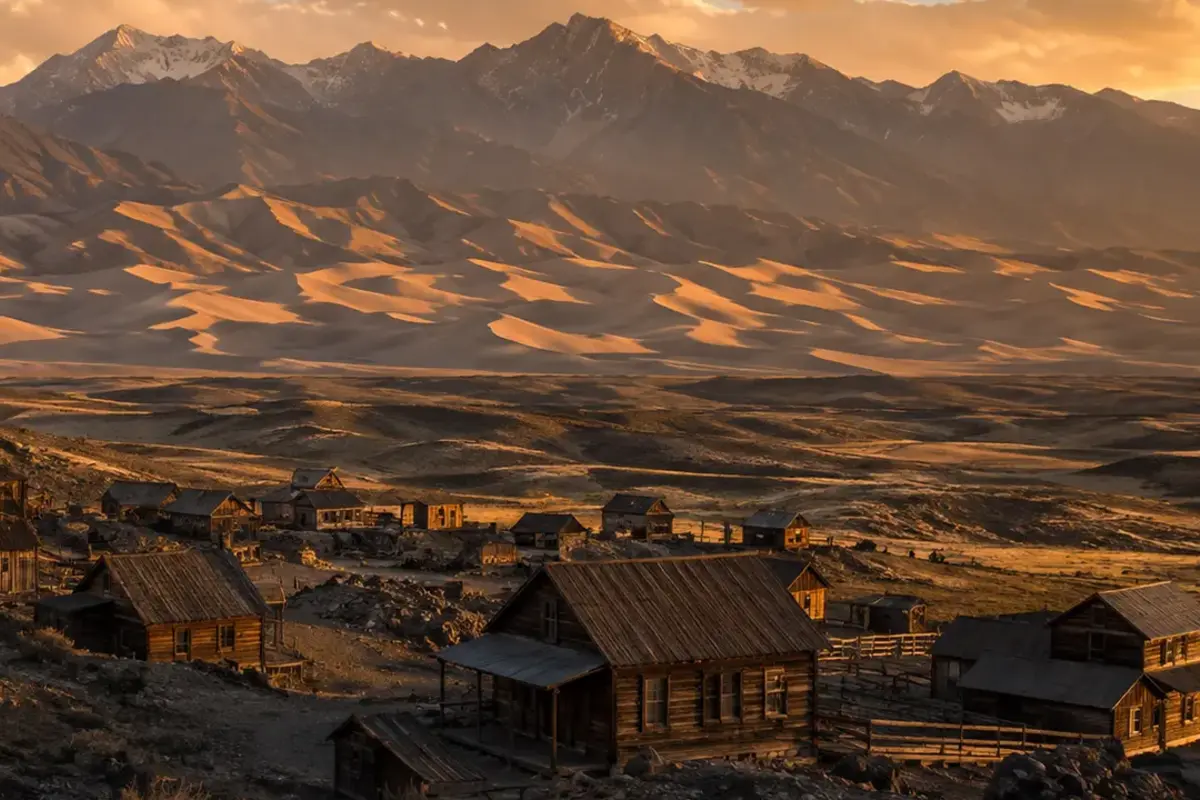
Duncan developed during a mining promotion cycle, and some residents later established Liberty farther south. Homes, a hotel, school and stage service reflected confidence that the district would grow.
Families created ordinary lives far from major towns. Surviving photographs show children, houses and community institutions rather than only prospectors.
Why the community changed
Gold prospects were less rewarding than promoters suggested. Without dependable production, employment and investment diminished.
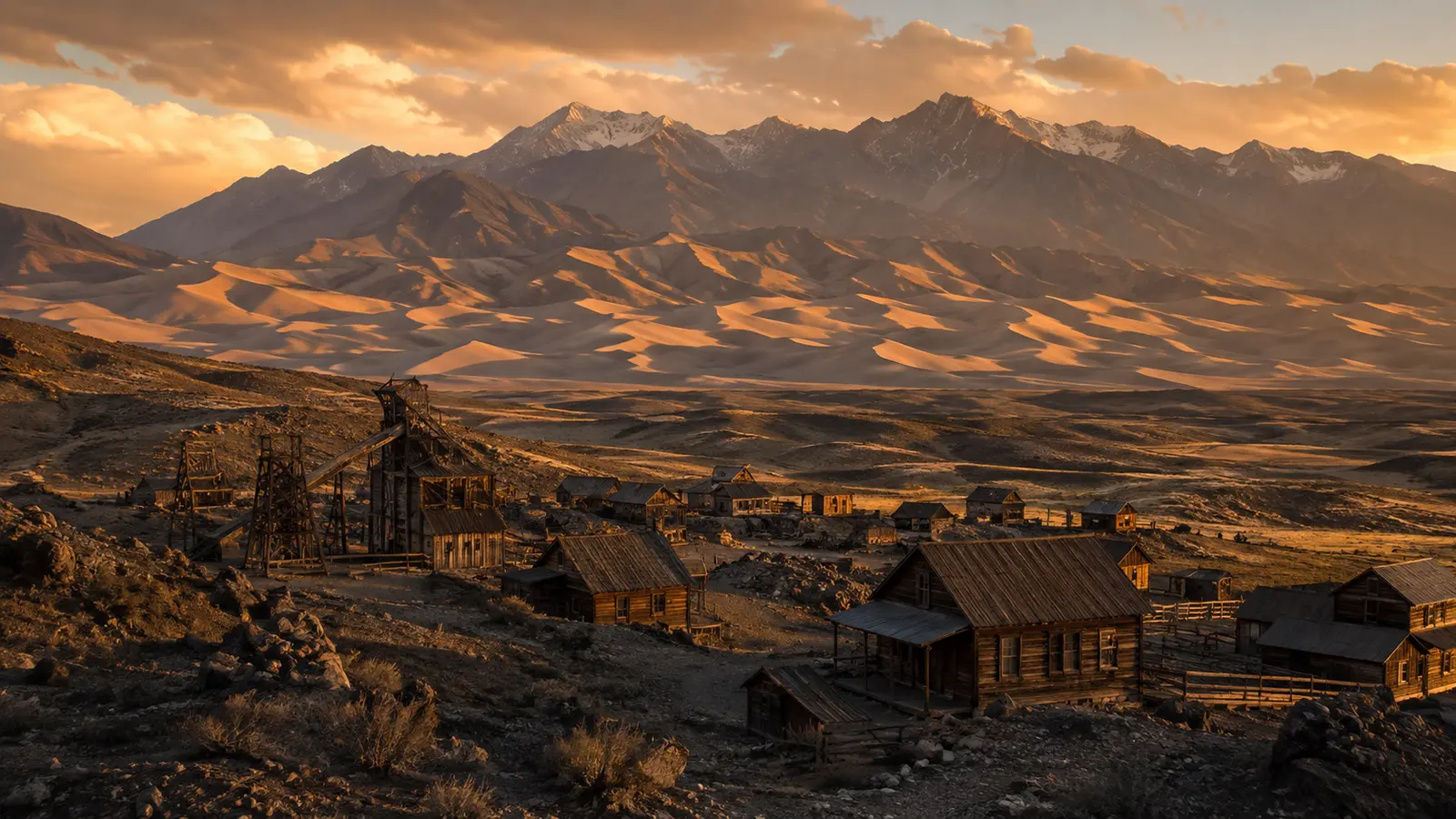
Residents relocated, buildings disappeared and private land now covers parts of the former town sites. Scattered materials require careful interpretation.
What remains today
The National Park Service documents Liberty, Duncan and Denton Spring as part of the cultural history surrounding Great Sand Dunes National Park and Preserve.
Most of the sites are not open for unrestricted exploration, and some are on private property. Learn through park exhibits and archives instead of seeking unauthorized access.
Why this story matters
These towns warn against allowing promotional language to become historical fact. The dreams were real even when the mineral claims did not support them.
Places like this are often reduced to a single dramatic label—ghost town, ruin, failure—but the physical remains tell a more complicated story. Economic decisions, transportation networks, natural resources and public policy all shape whether a community grows, adapts or disappears. Reading the landscape carefully means remembering that these were workplaces and homes before they became destinations.
Primary reference: National Park Service — Liberty, Duncan, and Denton Spring. This article summarizes public-history information in original language and adds editorial context; it does not reproduce the source text.