At a glance: Concrete pools and foundations of an enormous nineteenth-century public bathhouse.
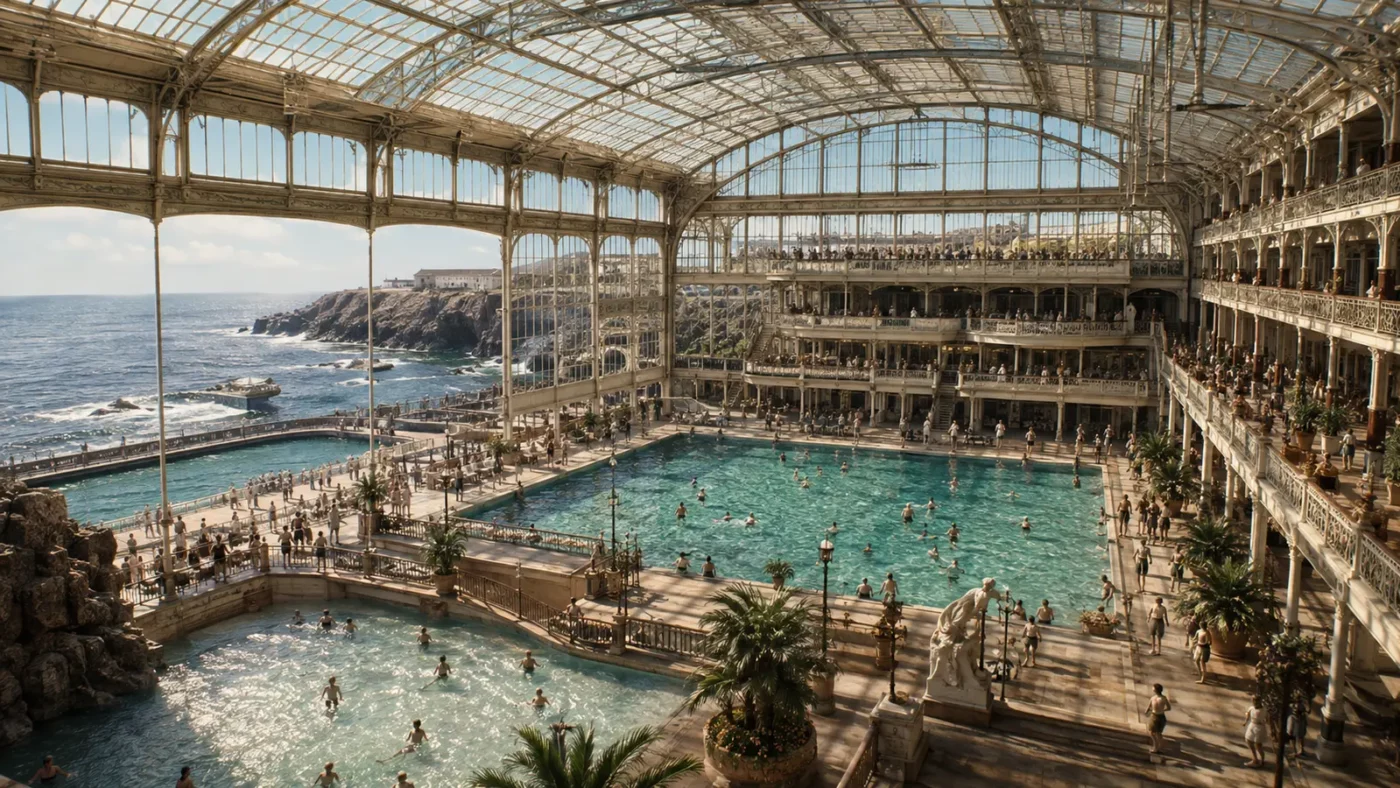
At the edge of San Francisco, waves break beyond the geometric remains of Sutro Baths. The ruins reveal the scale of a public entertainment complex once enclosed in glass.
How the place took shape
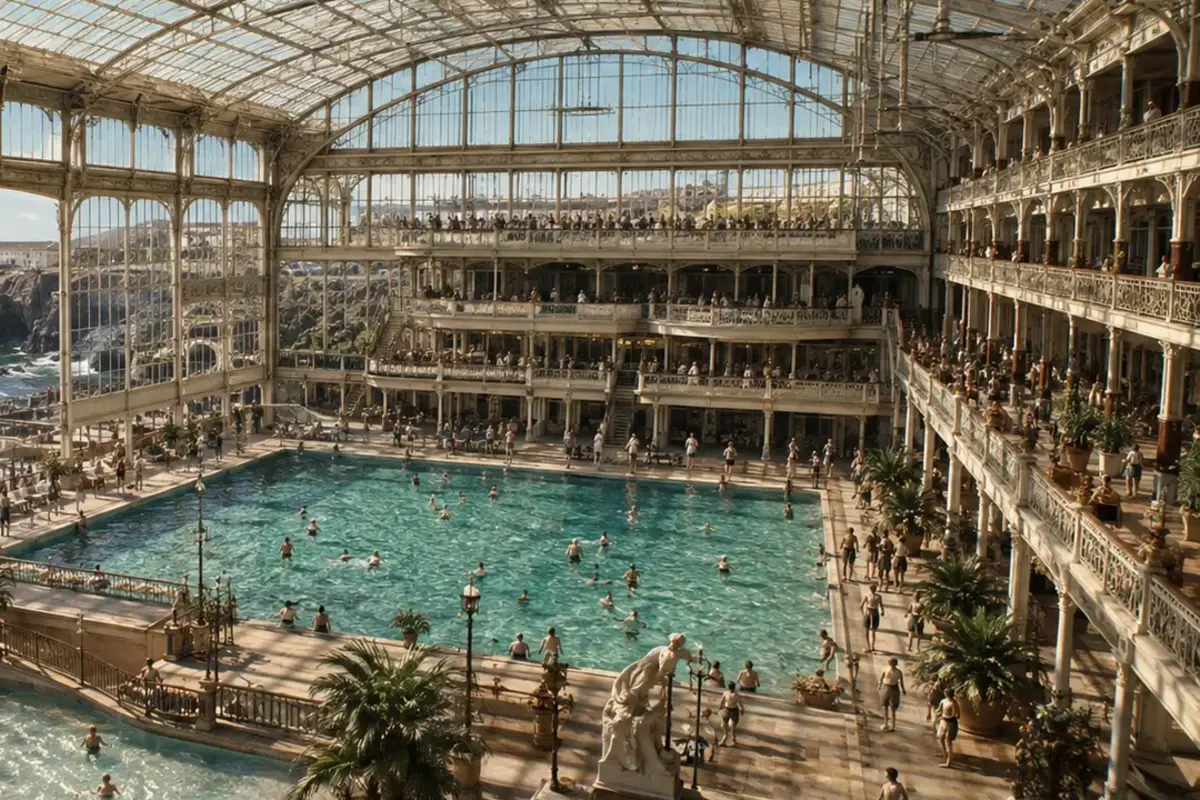
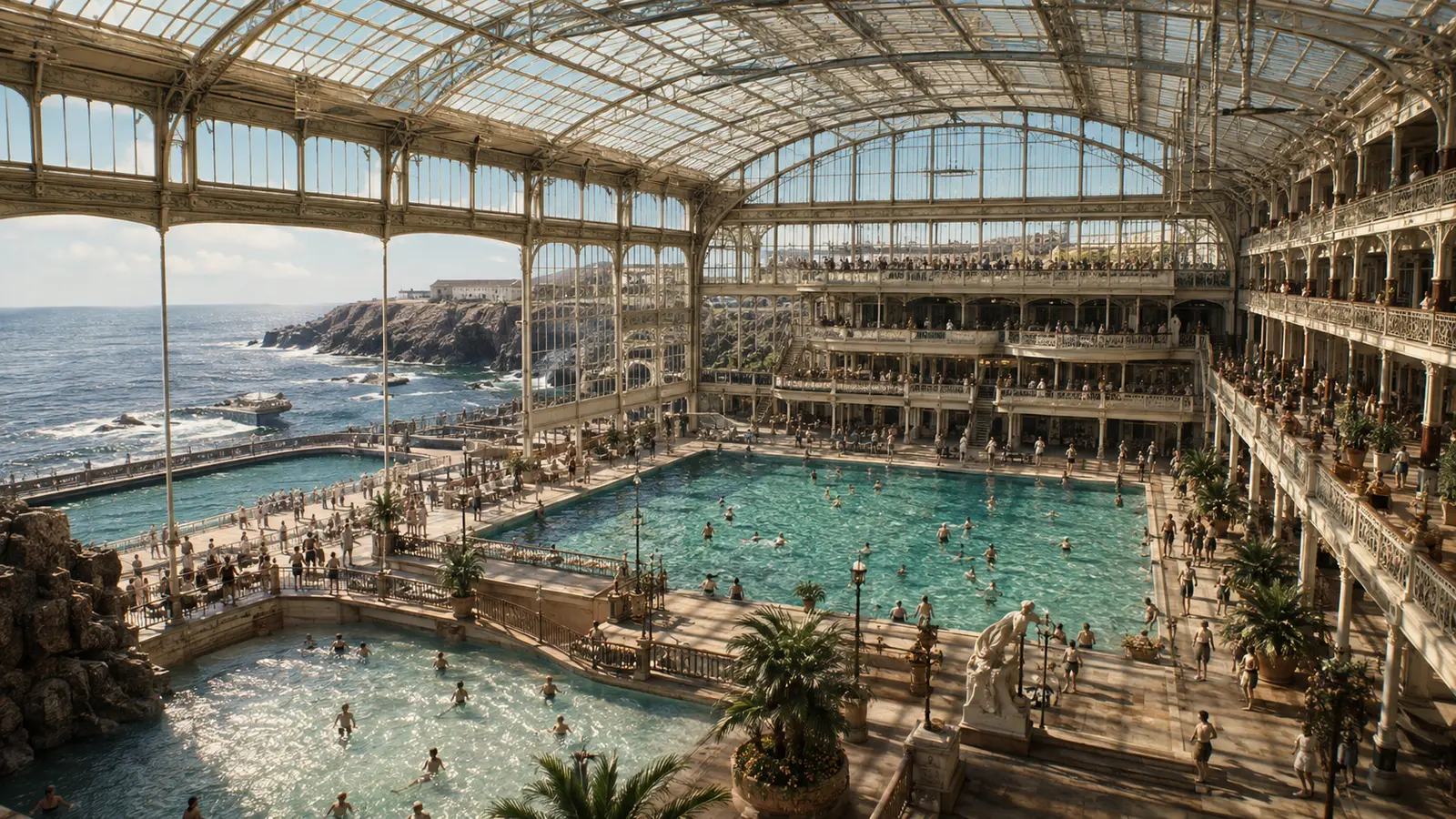
Adolph Sutro developed the baths in the 1890s near the Cliff House. Multiple pools, exhibits and transportation links made the complex a destination for city residents.
The building combined recreation, spectacle and engineering. Operating such a vast structure at the ocean’s edge, however, required continuous maintenance and revenue.

Why the community changed
Changing entertainment habits and high operating costs challenged the business. Later owners converted parts of the complex, and a 1966 fire destroyed the remaining building during demolition plans.
Concrete foundations and tunnels survived after the superstructure disappeared, creating a dramatic but hazardous coastal ruin.
What remains today
Sutro Baths is protected within Golden Gate National Recreation Area. Trails and overlooks interpret the site while exposing visitors to coastal weather.
Stay behind barriers and away from unstable edges, surf and closed tunnels. Fog, waves and slippery surfaces can change conditions quickly.
Why this story matters
Sutro Baths demonstrates that abandonment can follow changes in leisure as much as changes in industry. Even celebrated attractions require an economic model that survives beyond novelty.
Places like this are often reduced to a single dramatic label—ghost town, ruin, failure—but the physical remains tell a more complicated story. Economic decisions, transportation networks, natural resources and public policy all shape whether a community grows, adapts or disappears. Reading the landscape carefully means remembering that these were workplaces and homes before they became destinations.
Primary reference: National Park Service — Sutro Baths. This article summarizes public-history information in original language and adds editorial context; it does not reproduce the source text.