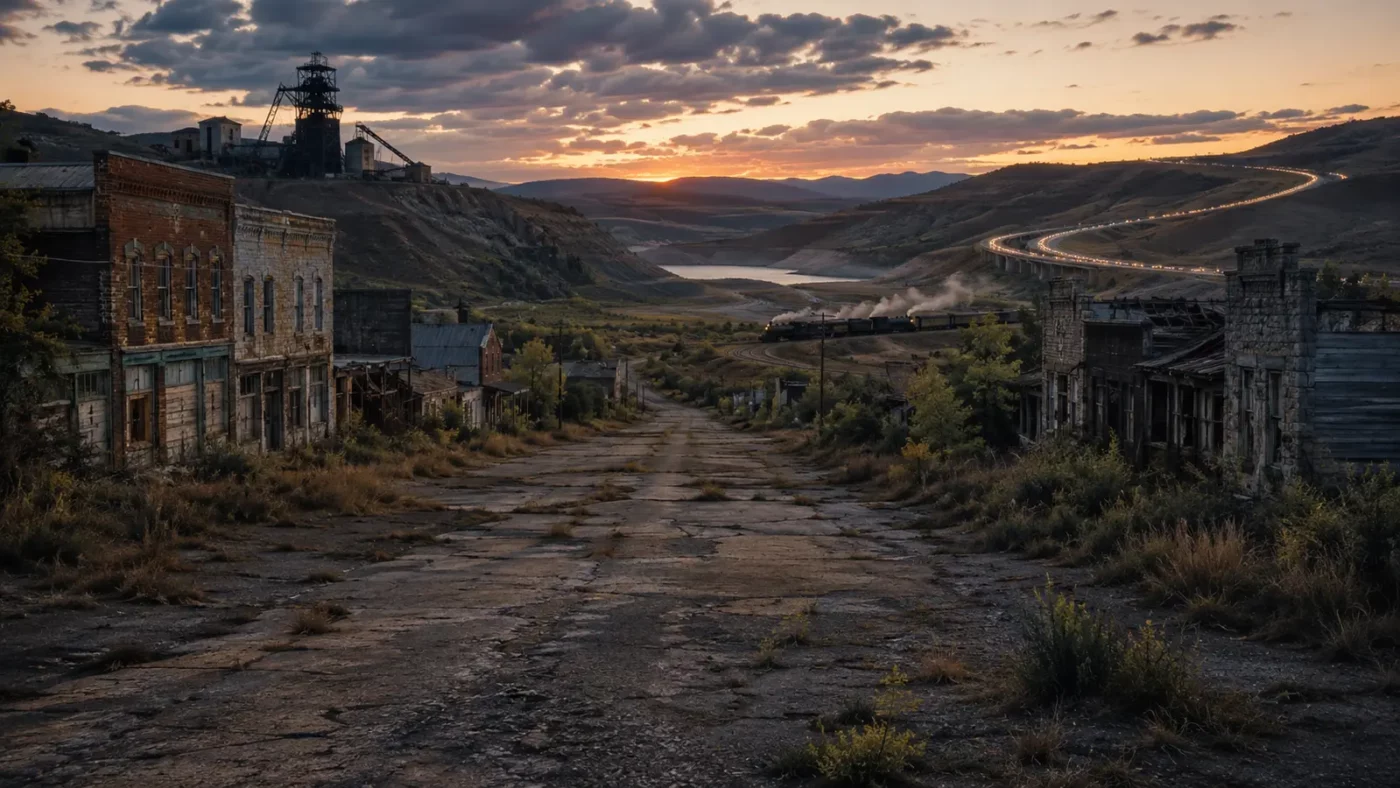
At a glance: A practical framework for understanding why communities shrink, relocate or disappear.
There is no single ghost-town story. Empty streets can follow a mine closure, a bypass, a flood-control project, depleted timber, railroad change or a combination of forces that accumulates over decades.
How the place took shape
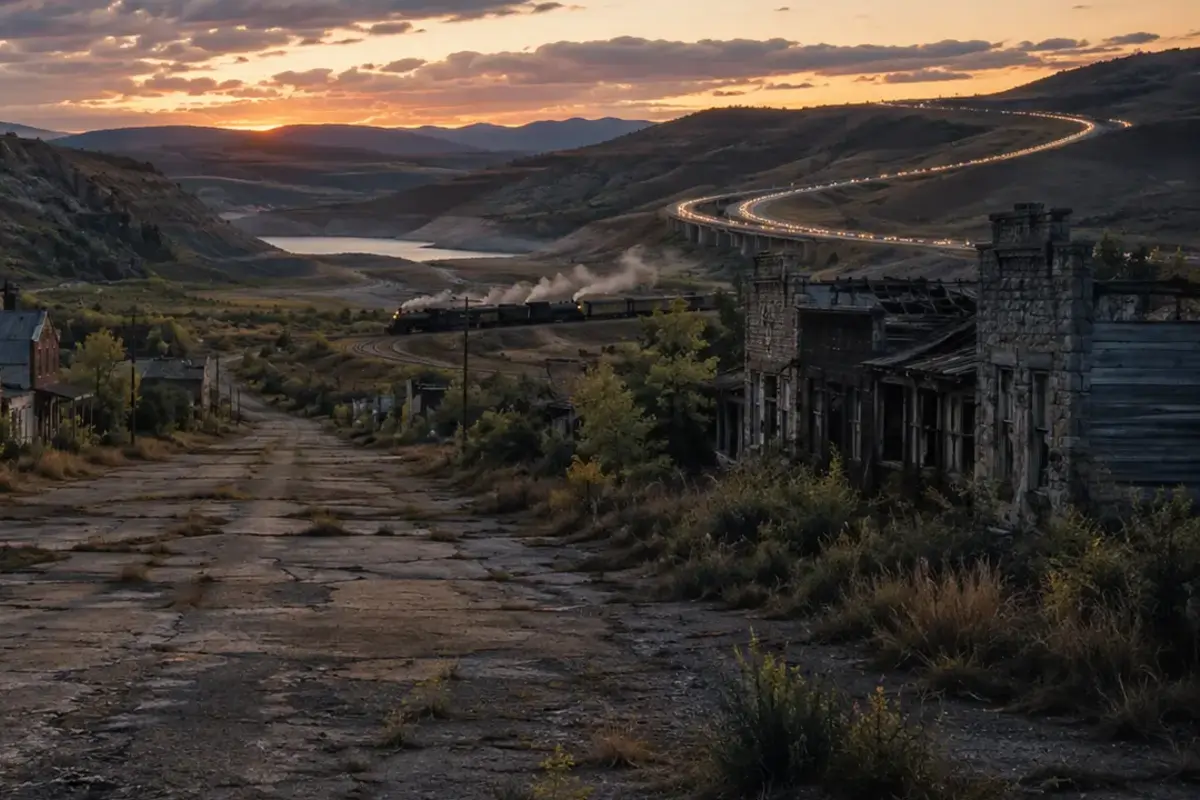
Resource towns often grow faster than their long-term economic base. Mining and timber can generate intense investment, but extraction physically reduces the resource supporting the settlement.
Transport towns depend on networks they do not control. A railroad reroute or interstate exit can shift customers miles away without damaging a single building.
Why the community changed
Water projects and disasters can force direct relocation, while discrimination, disinvestment and policy choices can make decline far less natural than later storytelling suggests.
Most places fade unevenly. A post office, family or business may remain long after outsiders apply the ghost-town label.
What remains today
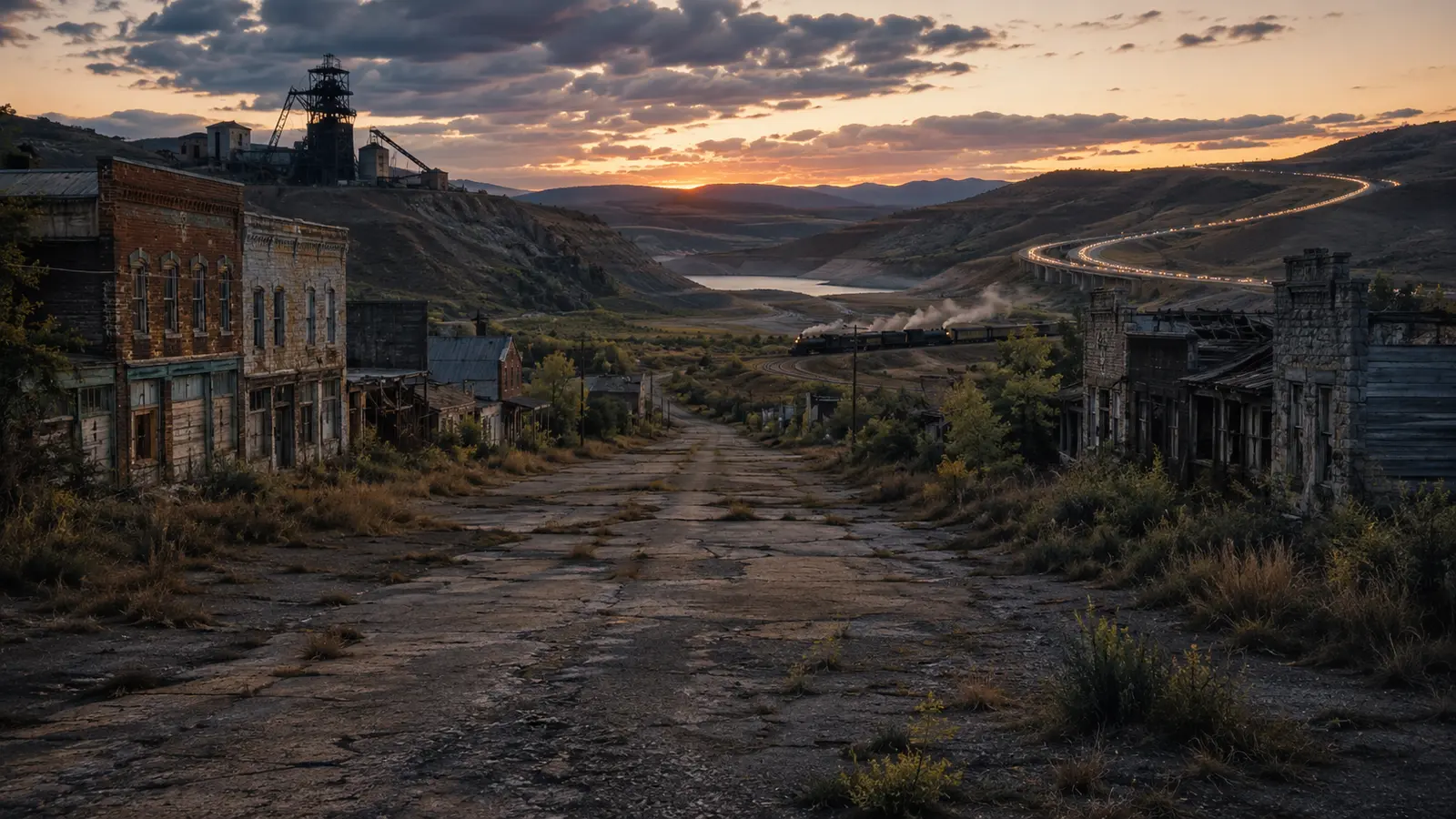
The National Park Service maintains an Abandoned Places program linking protected examples across the country and explaining safe, lawful visitation.
Research should begin with the managing agency, historic registers and archives. Social-media captions are leads, not evidence.
Why this story matters
Understanding patterns makes every individual story more accurate. It also prevents a dramatic photograph from becoming a misleading explanation.
Places like this are often reduced to a single dramatic label—ghost town, ruin, failure—but the physical remains tell a more complicated story. Economic decisions, transportation networks, natural resources and public policy all shape whether a community grows, adapts or disappears. Reading the landscape carefully means remembering that these were workplaces and homes before they became destinations.
Primary reference: National Park Service — Abandoned Places. This article summarizes public-history information in original language and adds editorial context; it does not reproduce the source text.